
Zstd Compression in OpenResty Edge: Faster, Lighter Than Gzip and Brotli
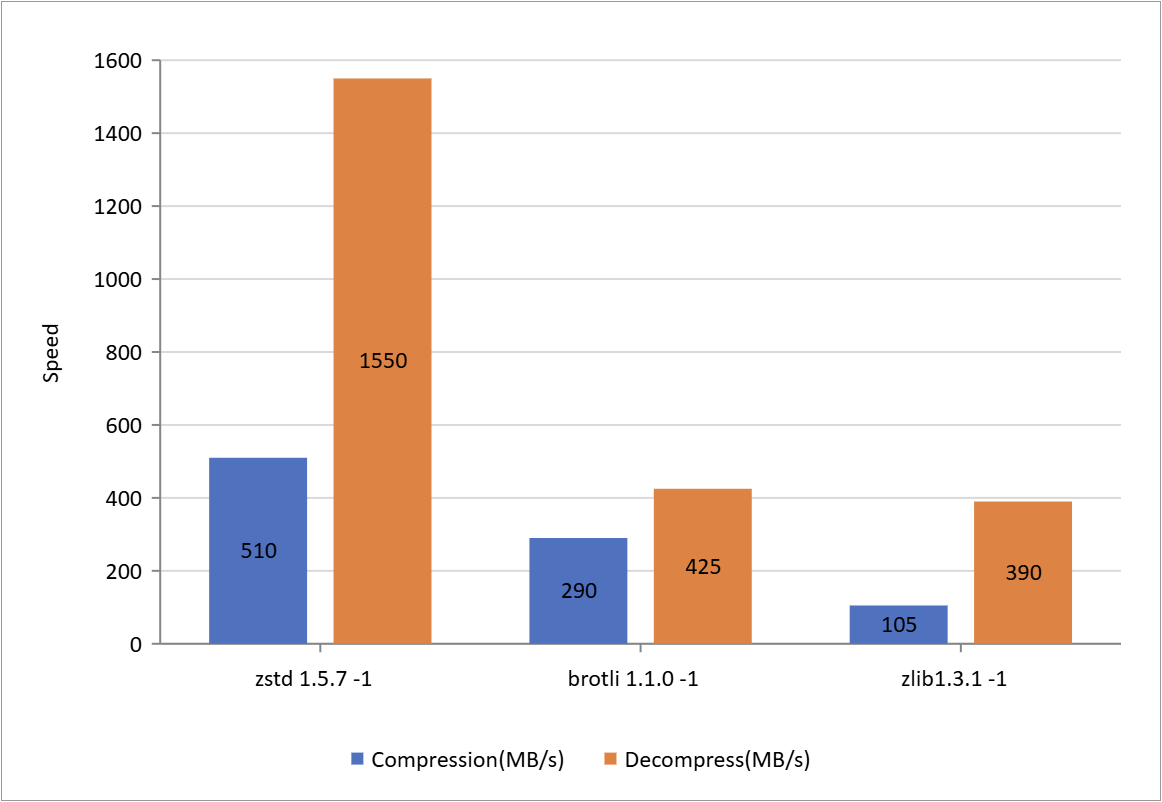
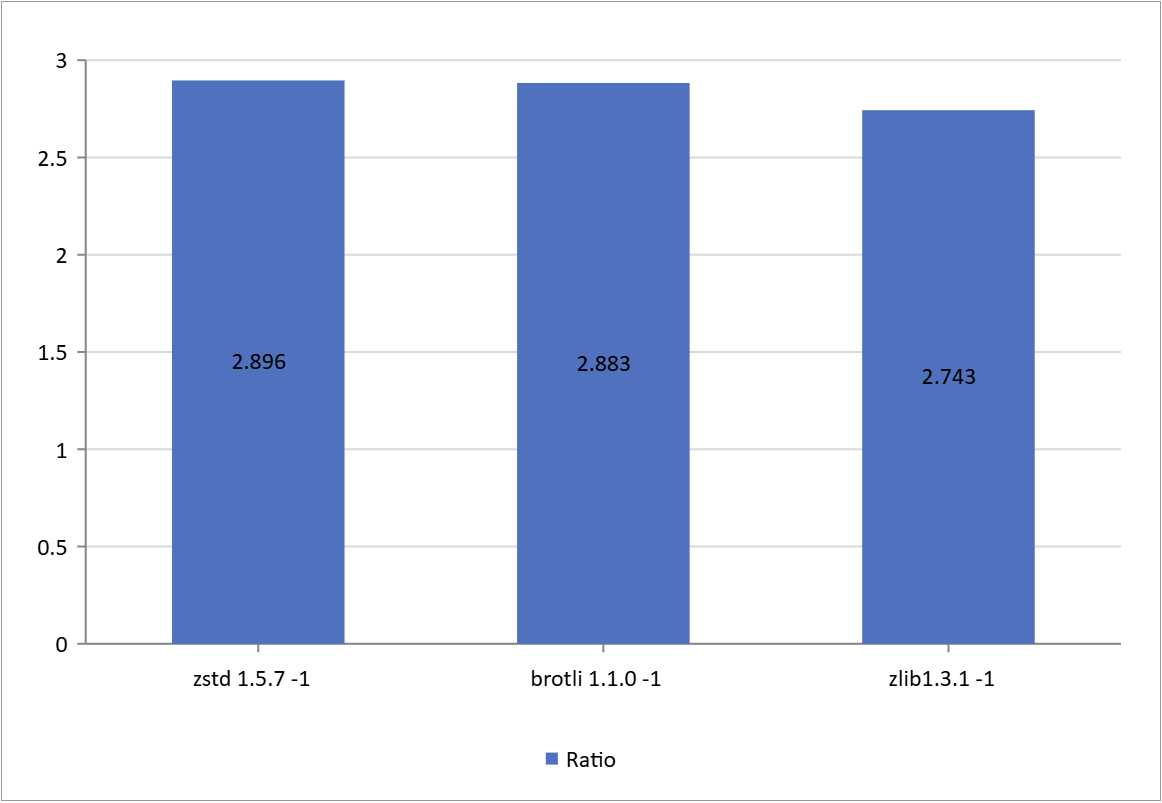
OpenResty Edge now supports Zstandard (zstd), a modern compression algorithm developed at Meta. In official benchmarks, zstd compresses data about 5x faster than gzip (510 vs 105 MB/s) and decompresses about 4x faster (1,550 vs 390 MB/s), while achieving a slightly higher compression ratio. Enabling zstd compression in OpenResty Edge cuts bandwidth, latency, and CPU cost at the same time.
Gzip served the web well for two decades, but it struggles with today’s dynamic APIs, high-concurrency traffic, and edge delivery. In this article, we look at what makes zstd different, why it fits edge architectures, and how to enable it in OpenResty Edge in a few clicks.
The Evolution of Compression Algorithms
For the past two decades, gzip has been the “default standard” for internet data transmission. From web HTML to API responses, from log streams to configuration files, its presence is almost ubiquitous. It is reliable and offers robust compatibility, but as network architectures and user experience demands evolve, we must acknowledge: the era of gzip is slowly waning.
The Invisible Bottleneck in Network Transmission
When users access content globally, every millisecond of page load speed is critical. Even with continuous optimization of caching and CDN layers, data volume remains the most direct factor impacting transmission efficiency.
- For end-users: smaller data volume means faster loading and lower energy consumption;
- For platform operators: a higher compression ratio leads to lower bandwidth costs and increased throughput for edge nodes.
gzip’s past success stemmed precisely from its “balance”: a sufficiently good compression ratio coupled with reasonable computational overhead. However, this very balance has now become a limitation. The demands of modern application scenarios are fundamentally different:
- The proportion of dynamic responses is increasing (e.g., API calls, GraphQL queries, real-time log streams), necessitating frequent compression of short-lived data;
- The proliferation of mobile and IoT devices leads to greater network fluctuations, demanding higher transmission efficiency and decompression performance;
- Data formats are increasingly diverse (JSON, Protobuf, Parquet, etc.), and gzip’s compression efficiency is suboptimal for some of these formats.
These shifts compel us to re-evaluate the role of compression algorithms: they are no longer merely “tools for saving bandwidth,” but critical components in the performance optimization pipeline that directly influence latency and user experience.
When Compression Algorithms Become a Performance Bottleneck
In high-concurrency scenarios, such as real-time response compression at the CDN edge, gzip’s CPU usage can become a hidden cost. The benchmark results below clearly show that zstd is significantly faster than Brotli and gzip.
For example, under the same latency budget:
- gzip might only be able to compress data at level=3;
- whereas next-generation algorithms like Zstandard can achieve smaller compression ratios and faster speeds with the same CPU overhead.
This means that with the same hardware resources, the system can: serve more requests; reduce network traffic costs; lower average response latency. For enterprises, this represents a very direct financial gain.
Unique Challenges of Edge Computing
In edge computing environments, each node processes traffic in close proximity to users: bandwidth resources are limited; CPU capacity is constrained; and the number of nodes is massive. In such an environment, every 1% optimization in compression performance can be amplified into significant overall benefits. This is precisely why more and more cloud vendors and infrastructure platforms are starting to introduce Zstandard (zstd) — a high-performance compression algorithm designed for modern computing architectures. It not only strikes a new balance between compression ratio and speed, but more importantly: it transforms “compression” into an active lever for performance optimization, rather than an unavoidable overhead.
What is Zstandard (zstd)
Zstandard, abbreviated as zstd, is a general-purpose lossless compression algorithm developed by Meta (formerly Facebook). Its design goal is straightforward: to significantly boost compression and decompression speeds while maintaining a high compression ratio. At the algorithmic level, zstd isn’t merely an incremental improvement upon gzip or Brotli; instead, it fundamentally re-evaluates the “compression performance triangle” – the relationship between compression ratio, speed, and resource consumption.
How zstd Is Designed for Modern Hardware and Data
Traditional gzip, designed in the 1990s, primarily considered environments with single-threaded CPUs, slower disk I/O, and limited memory. Zstd, however, addresses a completely different era:
- Multi-core CPUs and SIMD instruction sets are now the norm;
- Data formats are highly structured (JSON, Avro, Protobuf);
- Network I/O has become a performance bottleneck.
In this context, zstd’s core optimization objective is to make compression an operation suitable for real-time use, rather than a background task. Its compression mode supports fine-grained adjustment across 22 levels:
- Lower levels are ideal for real-time traffic (e.g., API response compression);
- Higher levels can be utilized for archiving or log storage (offering compression ratios that can surpass Brotli).
This positions zstd as both a powerful tool for high-performance data transmission and an effective solution for high-density storage.
Key Technical Features of zstd
| Feature | Description |
|---|---|
| High Compression Ratio | Achieves 10-20% higher compression than gzip in most test scenarios, while also offering faster decompression speeds. |
| Extremely Fast Decompression Performance | zstd’s decompression speed significantly surpasses Brotli’s, making it ideal for high-concurrency online services. |
| Adjustable Compression Level (1-22) | Provides flexible control over the balance between CPU utilization and compression ratio, adapting to diverse business workloads. |
| Multi-threaded Optimization | Natively supports multi-core compression, enabling full utilization of parallel resources in Edge computing environments. |
| Dictionary Mode | For small, structurally similar data (e.g., API payloads), it can achieve an additional 2-5x compression improvement. |
These features enable a previously elusive balance between “transmission efficiency” and “computational overhead.”
Why Zstandard is Particularly Well-Suited for OpenResty Edge
Zstandard is not merely a simple algorithm upgrade; it represents a performance evolution perfectly tailored to the demands of edge architecture. In an edge computing environment, systems must simultaneously contend with three critical pressures: high concurrent requests, constrained computing resources, and extreme latency sensitivity. Traditional gzip often struggles to strike the right balance between compression ratio and speed in such scenarios – achieving high compression typically slows down processing, while faster compression often leads to wasted bandwidth.
Zstandard’s advent effectively resolves this “performance trade-off.” At low compression levels, it outperforms gzip in speed, and at medium to high levels, it still maintains an excellent compression ratio and decompression performance. This makes it ideal for adaptively balancing latency and resource utilization on edge nodes based on real-time load. More importantly, Zstandard offers a distinct advantage for dynamic content. It can stream-compress API responses or log data, completing the process within a millisecond-level latency budget, without needing to cache entire data blocks before processing. When combined with OpenResty Edge’s origin bandwidth optimization in a self-hosted CDN, this efficiency gain often translates into tangible system-wide performance improvements.
This means that when you enable Zstandard compression in OpenResty Edge:
- Users experience faster responses
- Bandwidth utilization is higher
- CPU overhead is actually lower
In the realm of performance engineering, achieving such a “triple-win” optimization is exceptionally rare. If gzip addressed the fundamental question of “can it be compressed?”, then Zstandard tackles the challenge of “how fast and how intelligently can compression be performed?”
How to Enable Zstandard (Zstd) Compression in OpenResty Edge
In OpenResty Edge, Zstd compression is designed as a multi-level configurable feature. This allows you to enable it globally, or exercise fine-grained control for specific applications or paths.
Hierarchical Configuration Architecture: Balancing Flexibility and Control
OpenResty Edge’s configuration system allows you to define compression strategies at various levels. The system automatically applies the highest-priority configuration, ensuring both flexibility and consistency. The configuration levels, from highest to lowest priority, are as follows:
- Page Rule Configuration
Location: Applications > HTTP Applications > [Specific Application] > Page Rules > Actions > Enable Gateway Zstandard / Set Zstandard Type
This provides the most granular control, allowing you to enable Zstandard compression for specific URL paths or conditions. It’s ideal for tailored optimization of performance-sensitive APIs or high-traffic resources.
- Global Custom Action Configuration
Location: Global Configuration > Global Custom Actions > Actions > Enable Gateway Zstandard / Set Zstandard Type
Allows you to create reusable Zstandard compression actions that can be consistently applied across multiple applications. This is particularly beneficial for multi-team collaboration and large-scale operations.
- Application Settings Configuration
Location: Applications > HTTP Applications > [Specific Application] > Settings > Zstandard
Define compression strategies for individual HTTP applications, enabling quick activation or adjustment of Zstandard compression. This is ideal for application-level performance tuning and gradual rollout/experimentation scenarios.
- Global Rewrite Rule Configuration
Location: Global Configuration > Global Rewrite Rules > Actions > Enable Gateway Zstandard / Set Zstandard Type
Enables defining system-level compression logic for specific conditions (e.g., request headers, path patterns). This ensures compression policies are consistently applied across multiple environments.
- Global General Settings
Location: Global Settings > General Settings > Zstandard Configuration
This section defines the system’s fundamental compression parameters. Here you can enable zstd compression for core MIME types (such as HTML, CSS, JSON, JS) in one place, establishing a stable baseline for all higher-level configurations.
When multiple zstd compression rules are defined across different levels, OpenResty Edge will automatically apply the highest priority configuration to avoid policy conflicts. Once enabled there, the Global General Settings serve as a foundational layer, providing a consistent compression baseline even when no application-specific rules are defined.
Interoperability with Other Compression Algorithms
The OpenResty Edge platform supports enabling multiple compression algorithms simultaneously (gzip, brotli, zstd). The system automatically selects the optimal algorithm based on client support:
Priority: Zstandard > Brotli > Gzip
This means that when clients such as Chrome or curl indicate support for zstd, OpenResty Edge will automatically use zstd compression to deliver content, ensuring the lowest latency and highest compression ratio. Clients that do not support zstd will automatically fall back to brotli or gzip, requiring no additional configuration.
Zstd vs Brotli vs Gzip: Which Should You Serve?
The short answer: serve all three, and let the gateway pick. In the official zstd benchmark shown above (level 1), zstd compresses at about 510 MB/s versus Brotli’s 290 MB/s and gzip’s 105 MB/s, while zstd decompresses at about 1,550 MB/s versus 425 and 390 MB/s — at a slightly better compression ratio (2.896 vs 2.883 vs 2.743). At higher levels, zstd’s ratio can even surpass Brotli’s, though for real-time edge traffic the low levels are usually the right trade-off.
The practical question is not which algorithm wins a benchmark, but what each client supports. Modern clients such as Chrome and curl advertise zstd support; older ones may only speak Brotli or gzip. This is why OpenResty Edge lets you enable gzip, Brotli, and zstd simultaneously and negotiates per request with the priority Zstandard > Brotli > Gzip, falling back automatically for clients without zstd support. You get the fastest algorithm each client can accept, with no configuration branching and no client left behind.
Summary: Next Steps in Performance Optimization
Throughout the history of internet performance optimization, compression algorithms have often been regarded as low-level details—silently residing at the end of the transmission chain, rarely brought to the forefront. But the reality is: compression efficiency is transmission efficiency. Every byte, every millisecond saved, is amplified into significant user experience and operational cost differences across tens of thousands of requests. The advent of Zstandard is more than just a leap in algorithmic performance. It embodies a new optimization philosophy: performance gains don’t necessarily stem from “more resources,” but rather from “smarter processing methods.”
By enabling Zstandard compression in OpenResty Edge, you gain not just a more efficient encoding algorithm, but an entire smoother, lighter content delivery pipeline:
- Faster Response Times — shortening Time to First Byte (TTFB) and ensuring dynamic content arrives more promptly;
- Lower Bandwidth Costs — achieving higher compression ratios across global nodes, optimizing overall transmission load;
- Smarter Architectural Choices — adaptive algorithms and browser negotiation mechanisms ensure optimal experience for various devices.
Future performance competition will no longer be solely about “processing quickly,” but about “faster transmission, lower costs, and a more stable experience.” Zstandard is precisely the new “transmission acceleration engine” for this era. Enabling it in OpenResty Edge might only involve a few lines of configuration changes, but it represents your first step in shifting performance optimization from “passive enhancement” to “active design.”
FAQ
Q: Is zstd better than Brotli? A: For real-time traffic, generally yes. In the official benchmark at level 1, zstd compresses at 510 MB/s versus Brotli’s 290 MB/s and decompresses at 1,550 MB/s versus 425 MB/s, with a slightly better ratio (2.896 vs 2.883). At higher levels, zstd’s compression ratio can surpass Brotli’s as well. Brotli remains a solid fallback for clients without zstd support.
Q: Which clients support zstd compression? A: Modern clients such as Chrome and curl advertise zstd support when they send requests. OpenResty Edge detects this per request and serves zstd-compressed responses only to clients that accept it, so you can enable it without worrying about compatibility.
Q: Is zstd compression enabled by default in OpenResty Edge? A: No — zstd compression is disabled by default. You can enable it in Global General Settings for core MIME types such as HTML, CSS, JSON, and JavaScript, or configure it per application, per URL path via page rules, or through global custom actions and rewrite rules — the highest-priority configuration wins.
Q: What happens when a client doesn’t support zstd? A: OpenResty Edge falls back automatically. With multiple algorithms enabled, it negotiates per request using the priority Zstandard > Brotli > Gzip, so clients without zstd support receive Brotli- or gzip-compressed responses with no additional configuration.
Q: What zstd compression level should I use? A: zstd offers 22 levels. Lower levels suit real-time traffic such as API responses, where speed matters most; higher levels suit archiving or log storage, where they can reach compression ratios beyond Brotli’s.
What is OpenResty Edge
OpenResty Edge is our all-in-one gateway software for microservices and distributed traffic architectures. It combines traffic management, private CDN construction, API gateway, security, and more to help you easily build, manage, and protect modern applications. OpenResty Edge delivers industry-leading performance and scalability to meet the demanding needs of high concurrency, high load scenarios. It supports scheduling containerized application traffic such as K8s and manages massive domains, making it easy to meet the needs of large websites and complex applications.
If you like this tutorial, please subscribe to this blog site and/or our YouTube channel. Thank you!
About The Author
Yichun Zhang (Github handle: agentzh), is the original creator of the OpenResty® open-source project and the CEO of OpenResty Inc..
Yichun is one of the earliest advocates and leaders of “open-source technology”. He worked at many internationally renowned tech companies, such as Cloudflare, Yahoo!. He is a pioneer of “edge computing”, “dynamic tracing” and “machine coding”, with over 22 years of programming and 16 years of open source experience. Yichun is well-known in the open-source space as the project leader of OpenResty®, adopted by more than 40 million global website domains.
OpenResty Inc., the enterprise software start-up founded by Yichun in 2017, has customers from some of the biggest companies in the world. Its flagship product, OpenResty XRay, is a non-invasive profiling and troubleshooting tool that significantly enhances and utilizes dynamic tracing technology. And its OpenResty Edge product is a powerful distributed traffic management and private CDN software product.
As an avid open-source contributor, Yichun has contributed more than a million lines of code to numerous open-source projects, including Linux kernel, Nginx, LuaJIT, GDB, SystemTap, LLVM, Perl, etc. He has also authored more than 60 open-source software libraries.
Related Articles
OpenResty XRay Dec 15, 2025

OpenResty XRay Dec 3, 2025

OpenResty XRay Nov 17, 2025

OpenResty XRay Nov 11, 2025

OpenResty XRay Oct 15, 2025