
How to Use OpenResty Edge Global Search to Find Request IDs, Upstreams & Apps
The global search box in OpenResty Edge sits in the upper center of the Admin console and searches five kinds of objects from one place: a 24-character Request ID (which opens the Request ID Decoder), text on the interface, upstreams by IP address or name, applications by name, and blog posts. Type a keyword and Edge routes you straight to the matching page.
This tutorial walks through each search type with a live console.
Search by Request ID
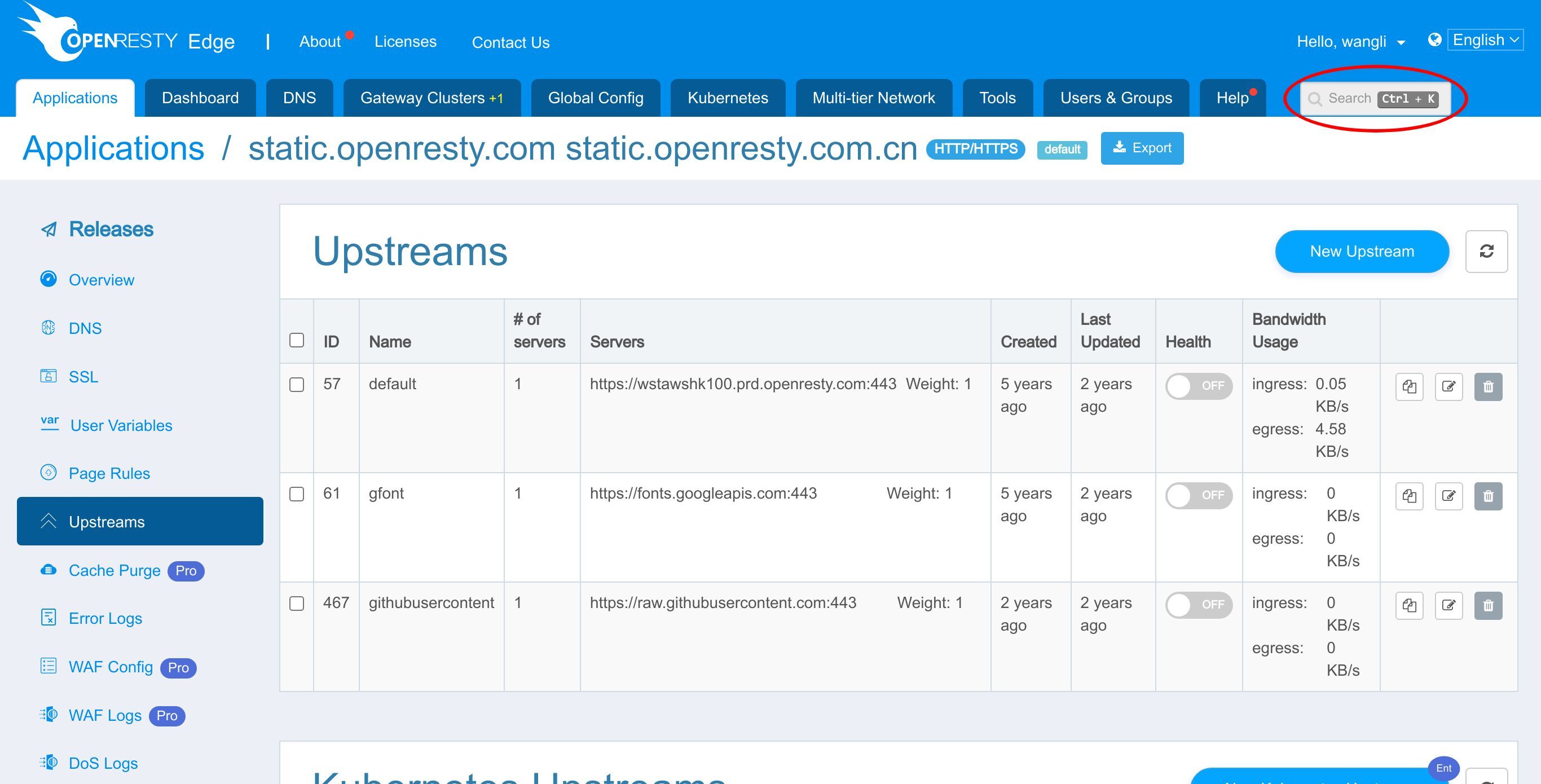
OpenResty Edge Admin’s search box is located in the upper center of the screen. You can enter keywords to search. There are various types of keywords.
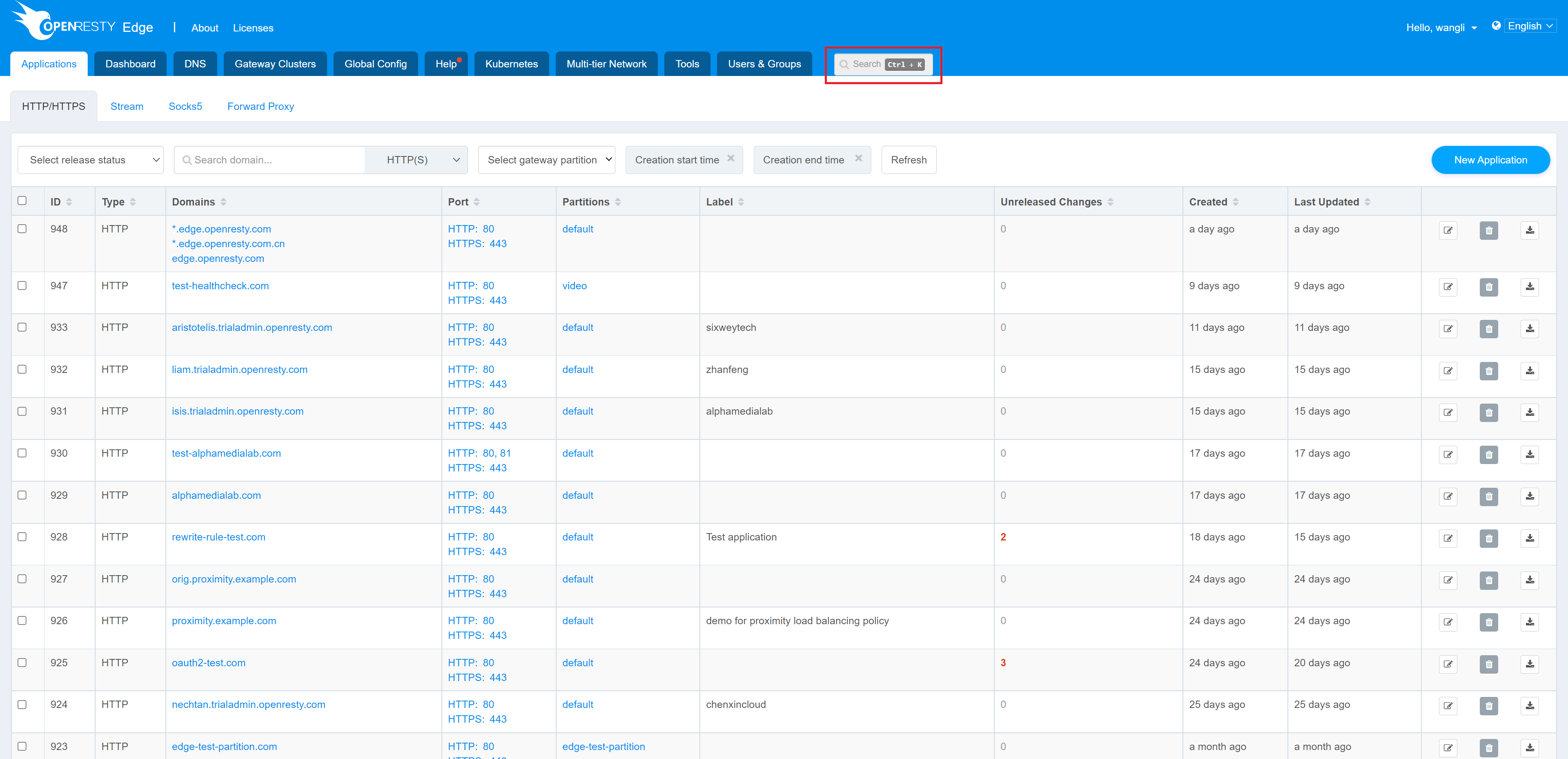
First, let’s look at the Request ID. The Request ID is a unique identifier that OpenResty Edge makes for each request so that requests can be tracked easily. It is a 24-character identifier consisting of lowercase letters and numbers. Now let’s see what we can find with this identifier.
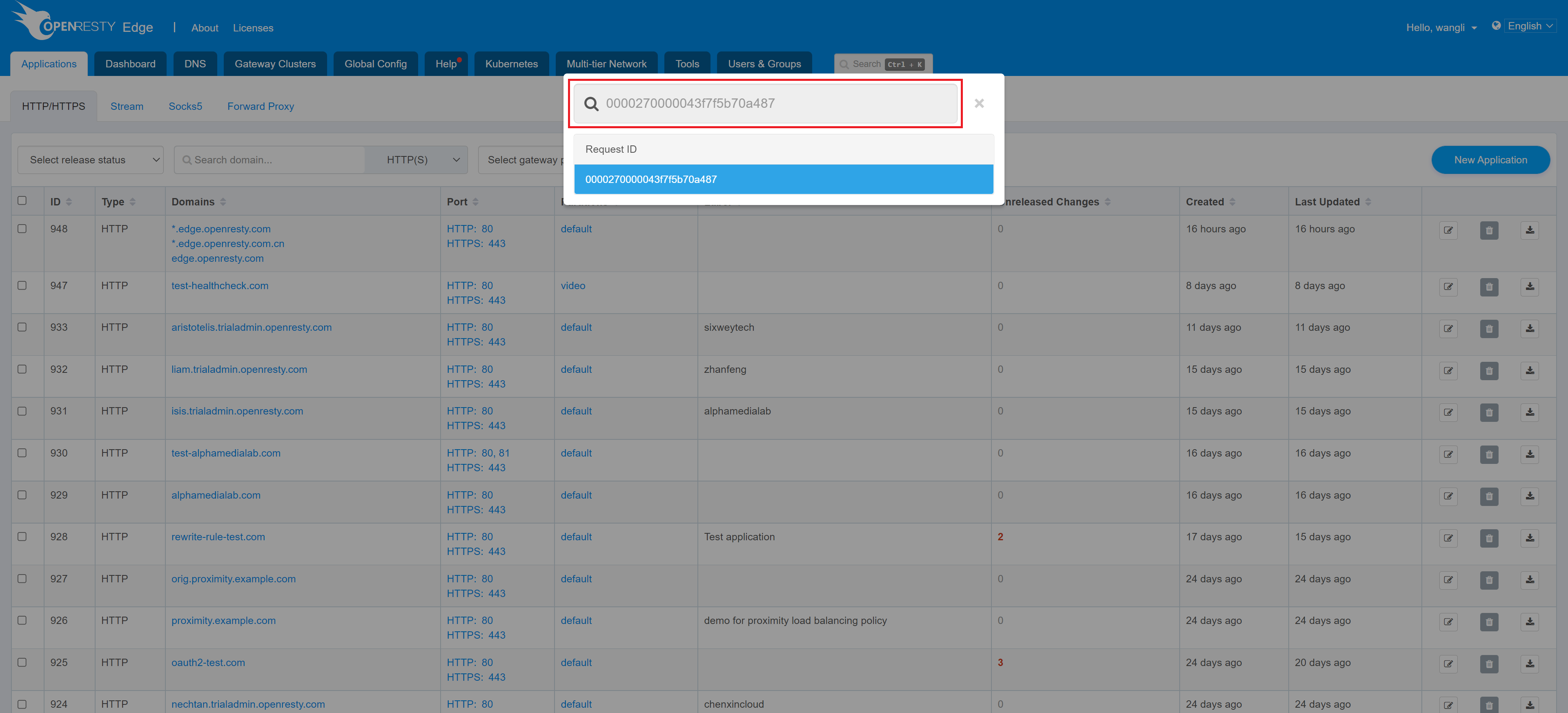
We go to the OpenResty Edge’s Admin web console. It is our sample deployment of the console. Every user has her local deployment. We will find a Request ID to search for in one of these applications.
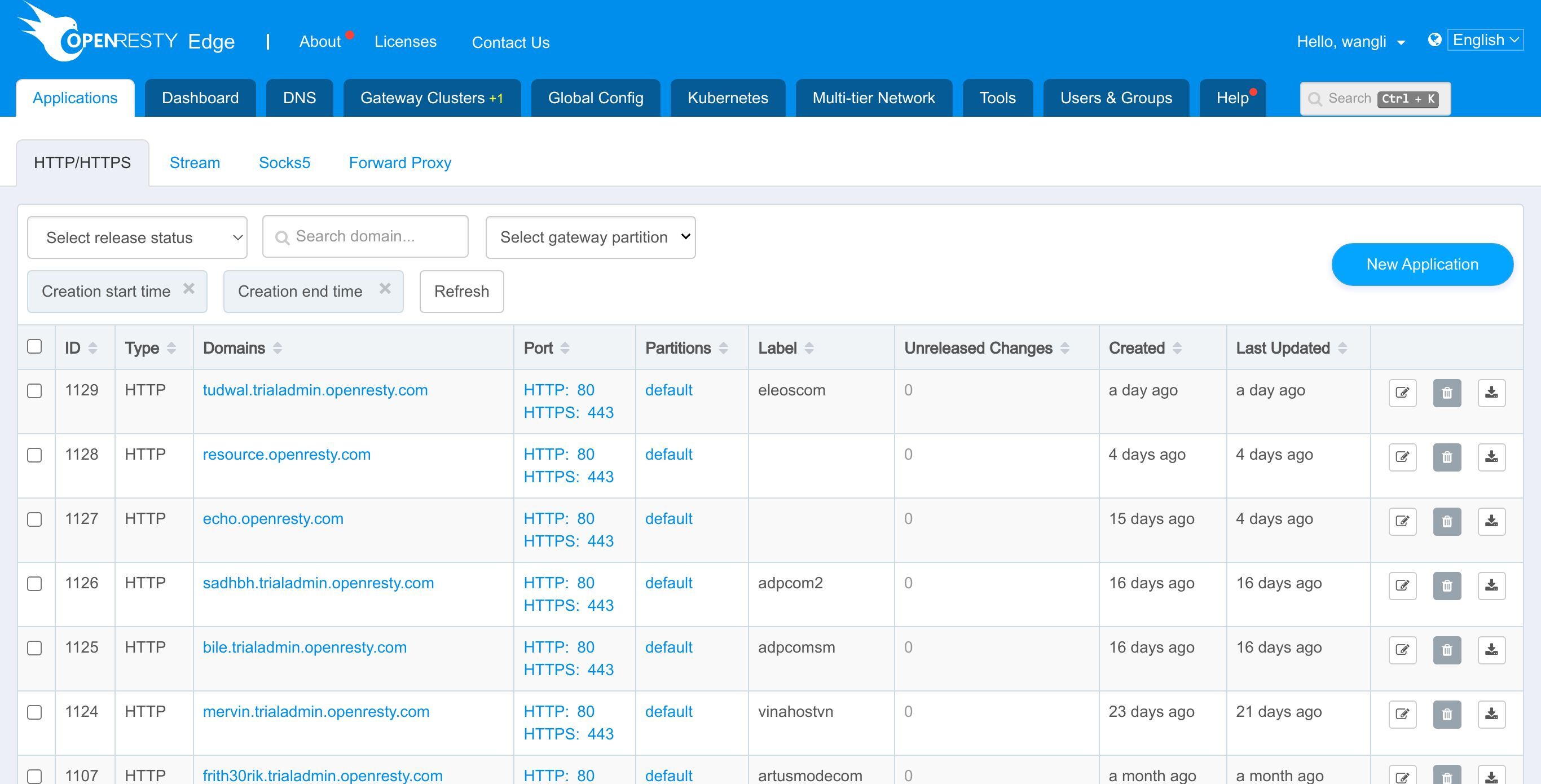
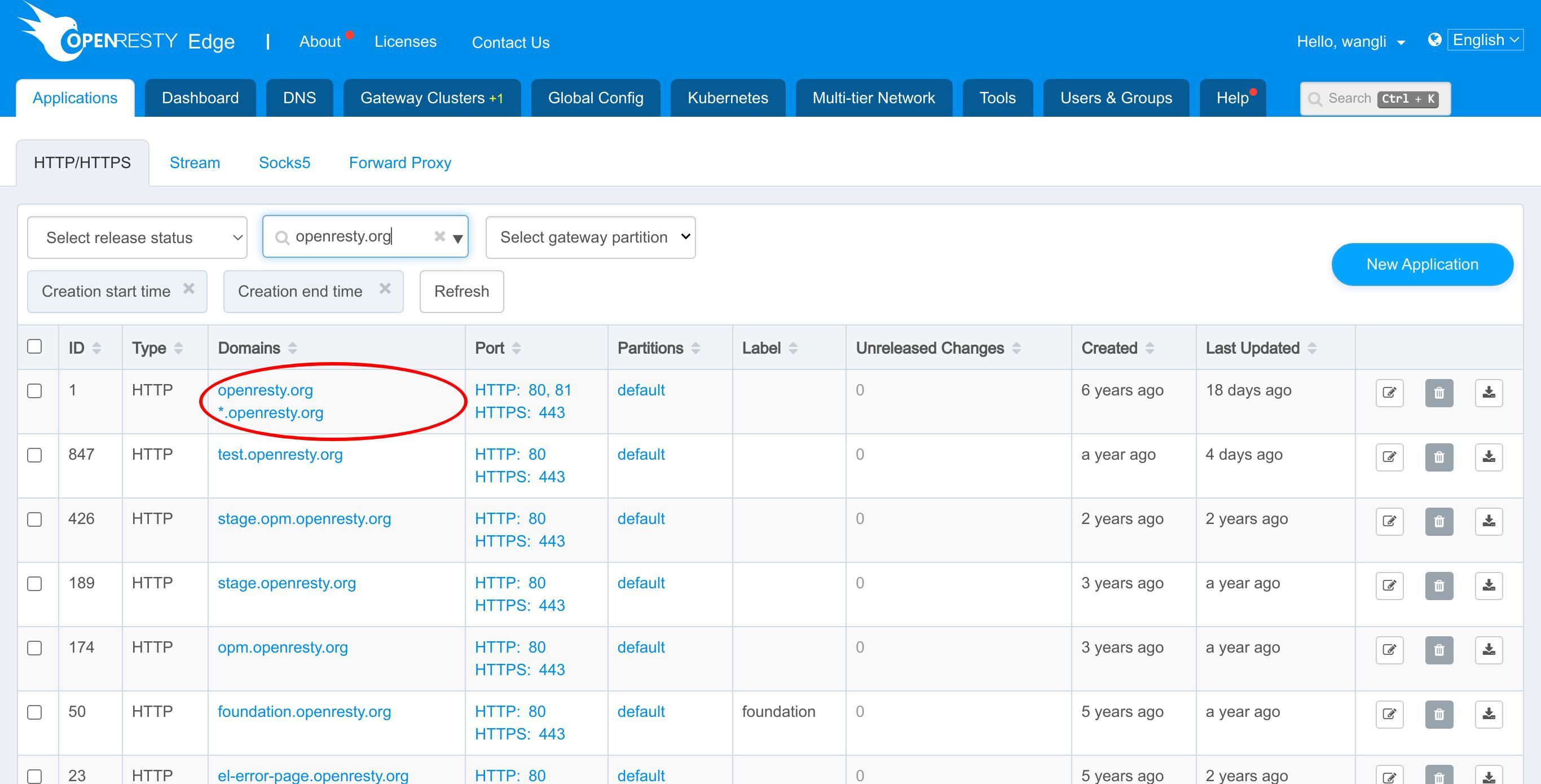
Type in openresty.org in the search box.
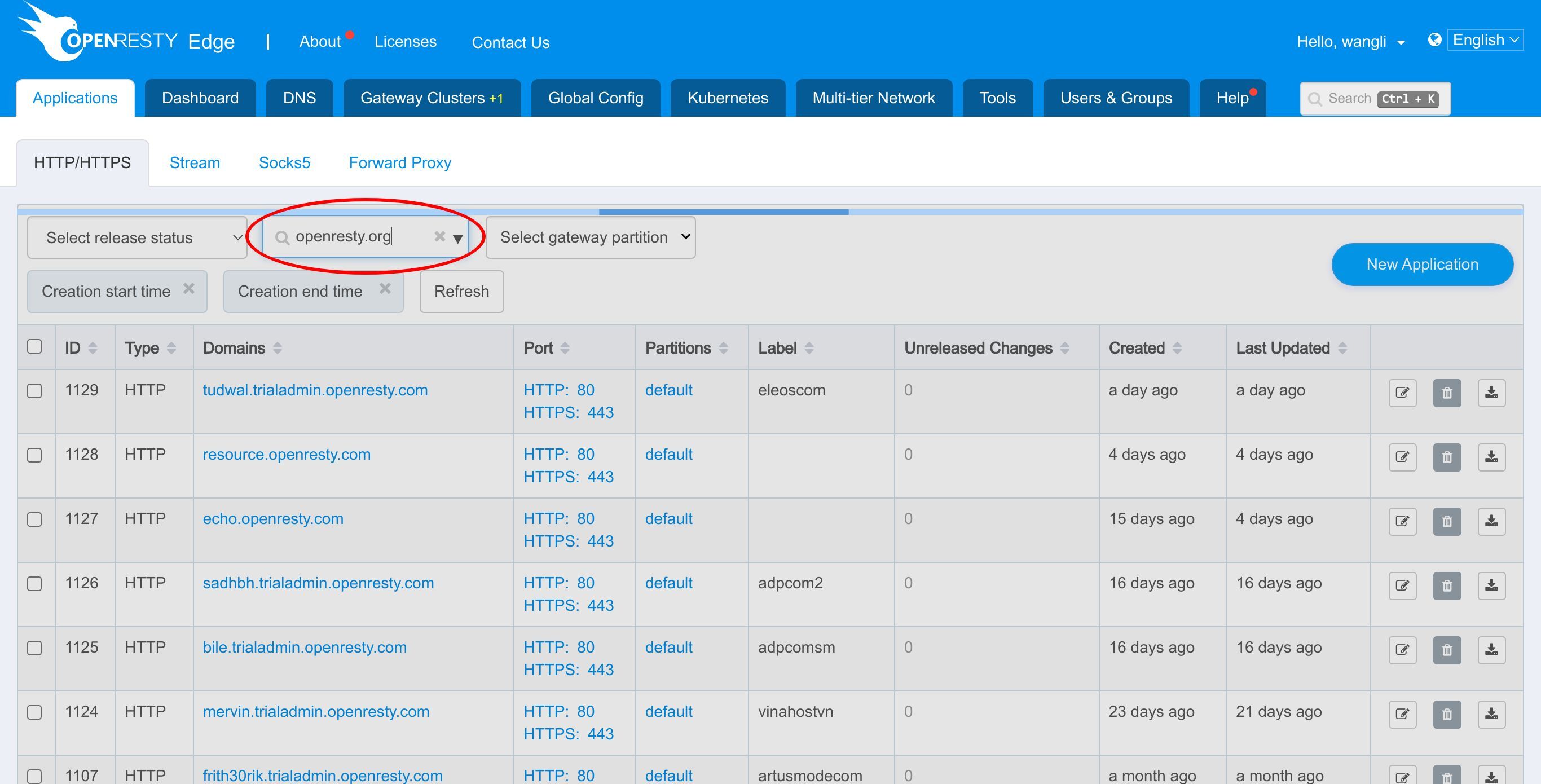
Enter this application.
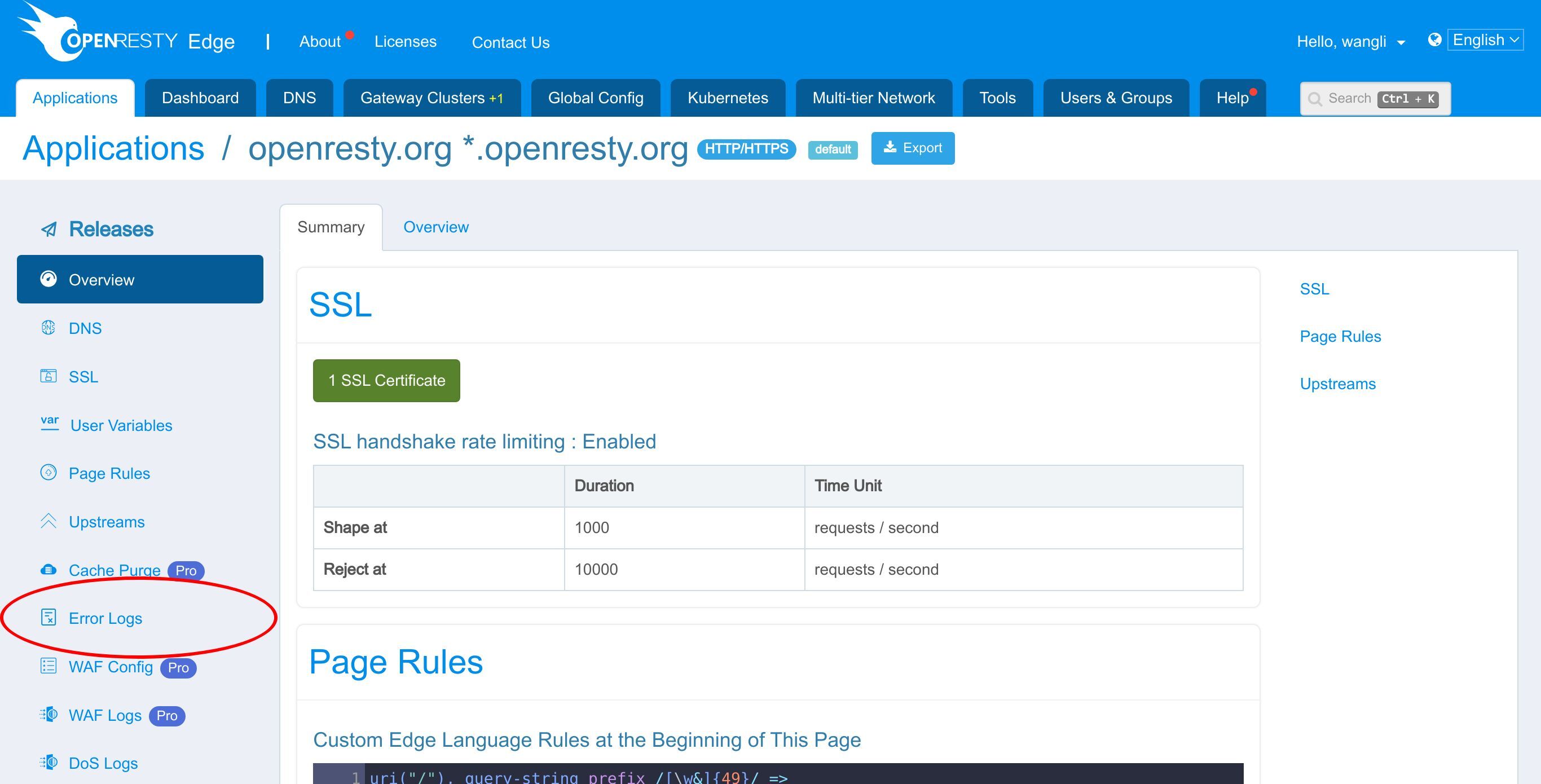
Enter the Error Logs page。
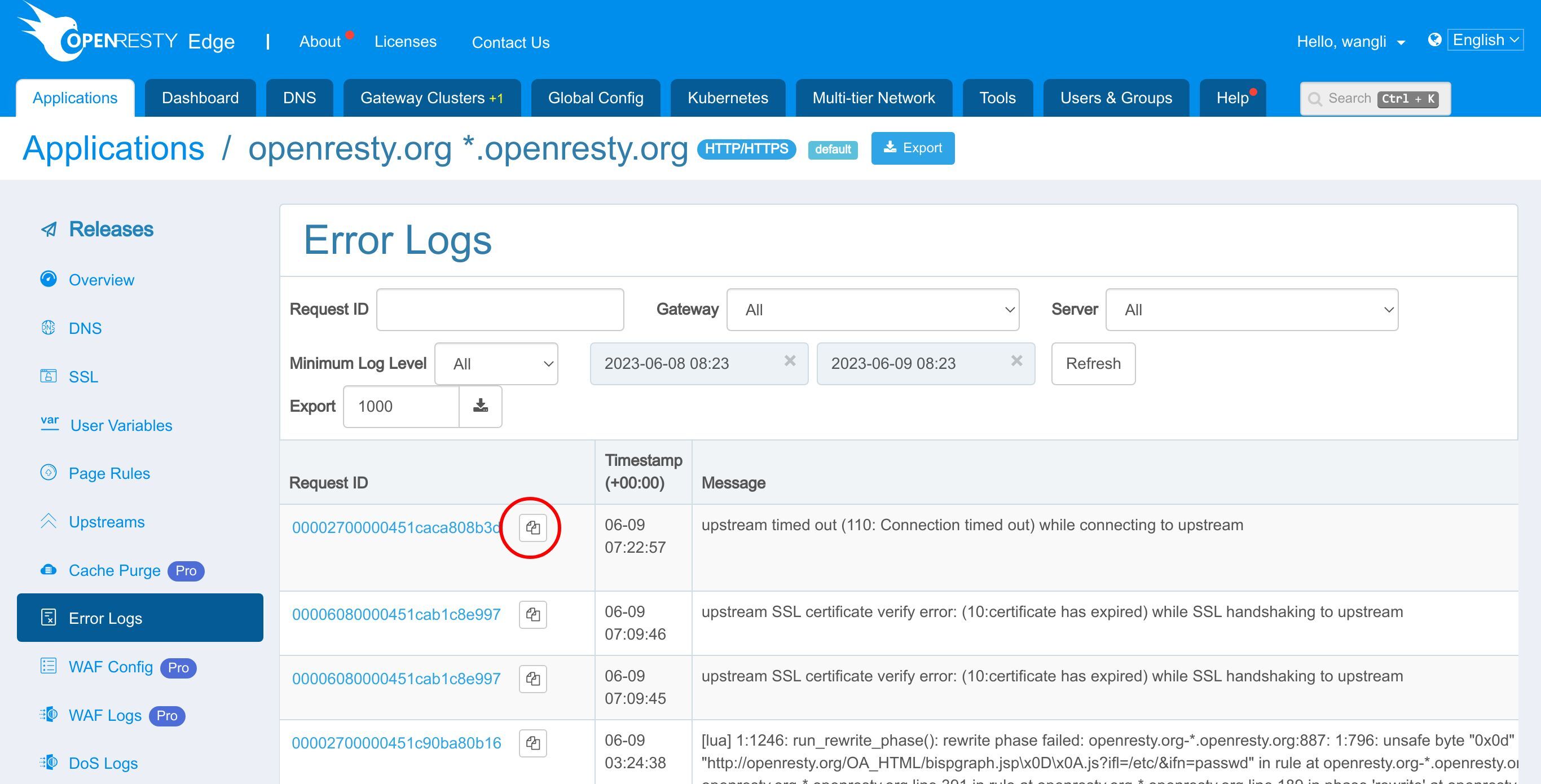
You can find the error logs of this application. Each log has a Request ID.
Copy the first Request ID.
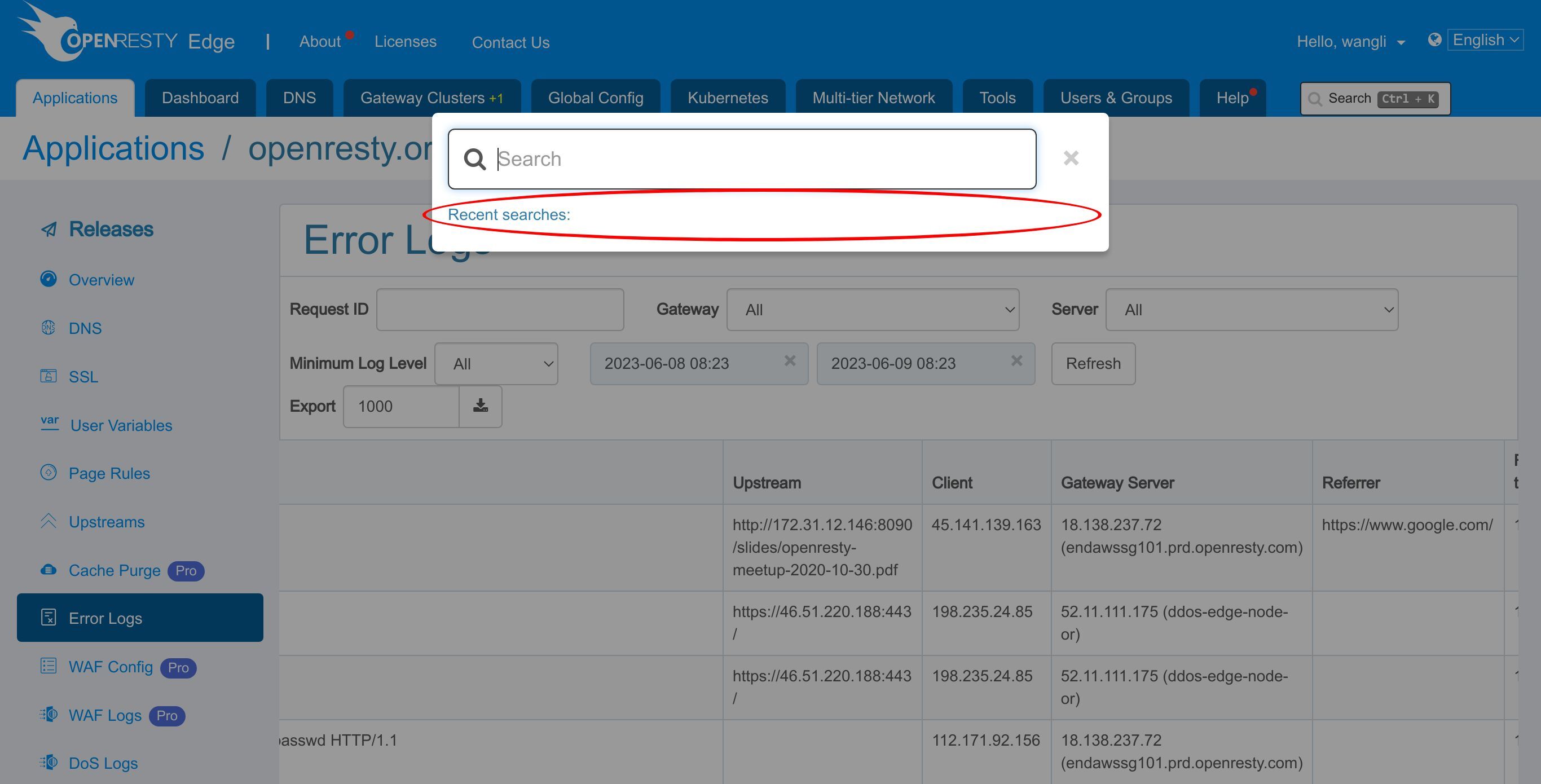
Click to open the search box.
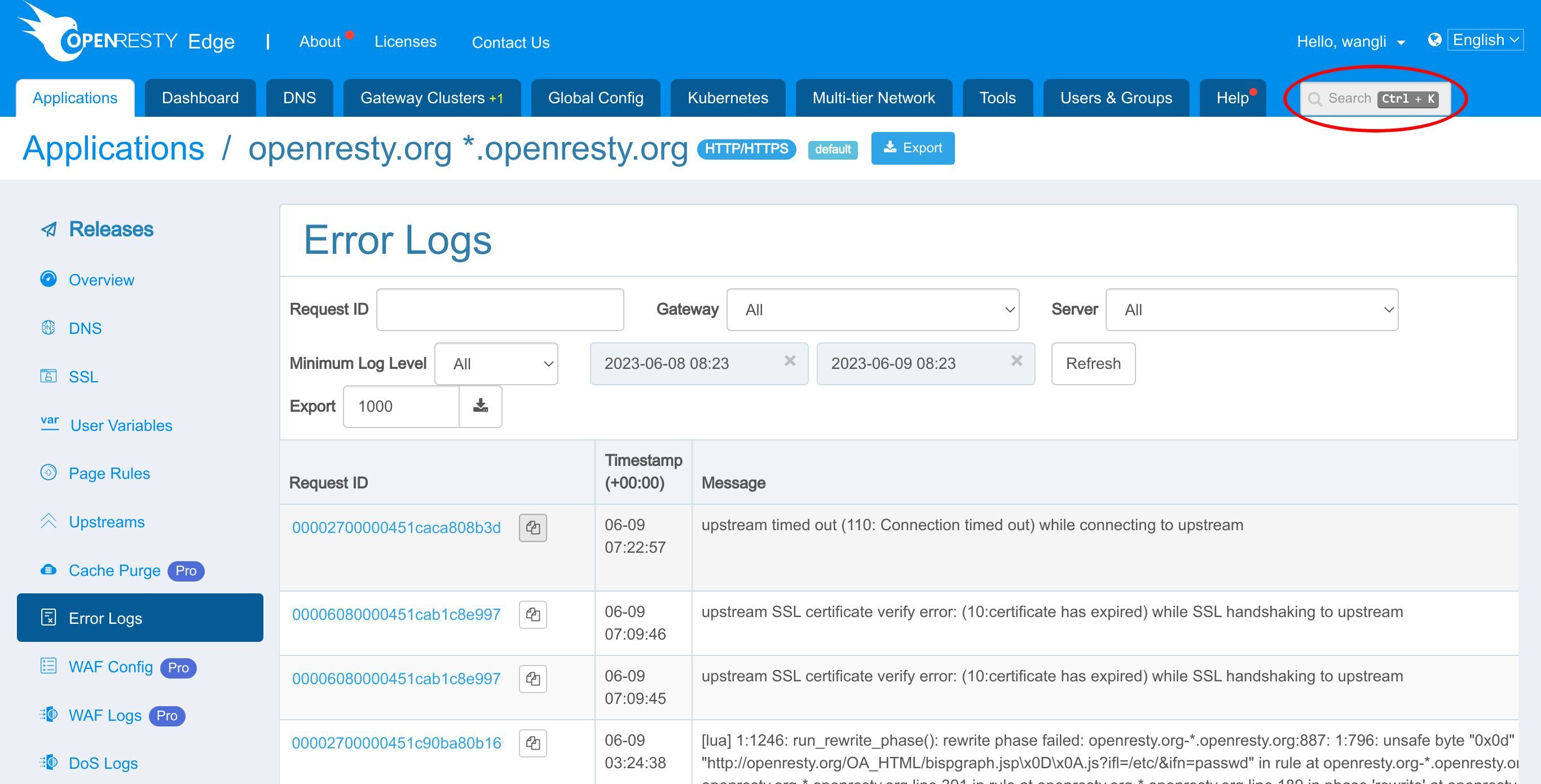
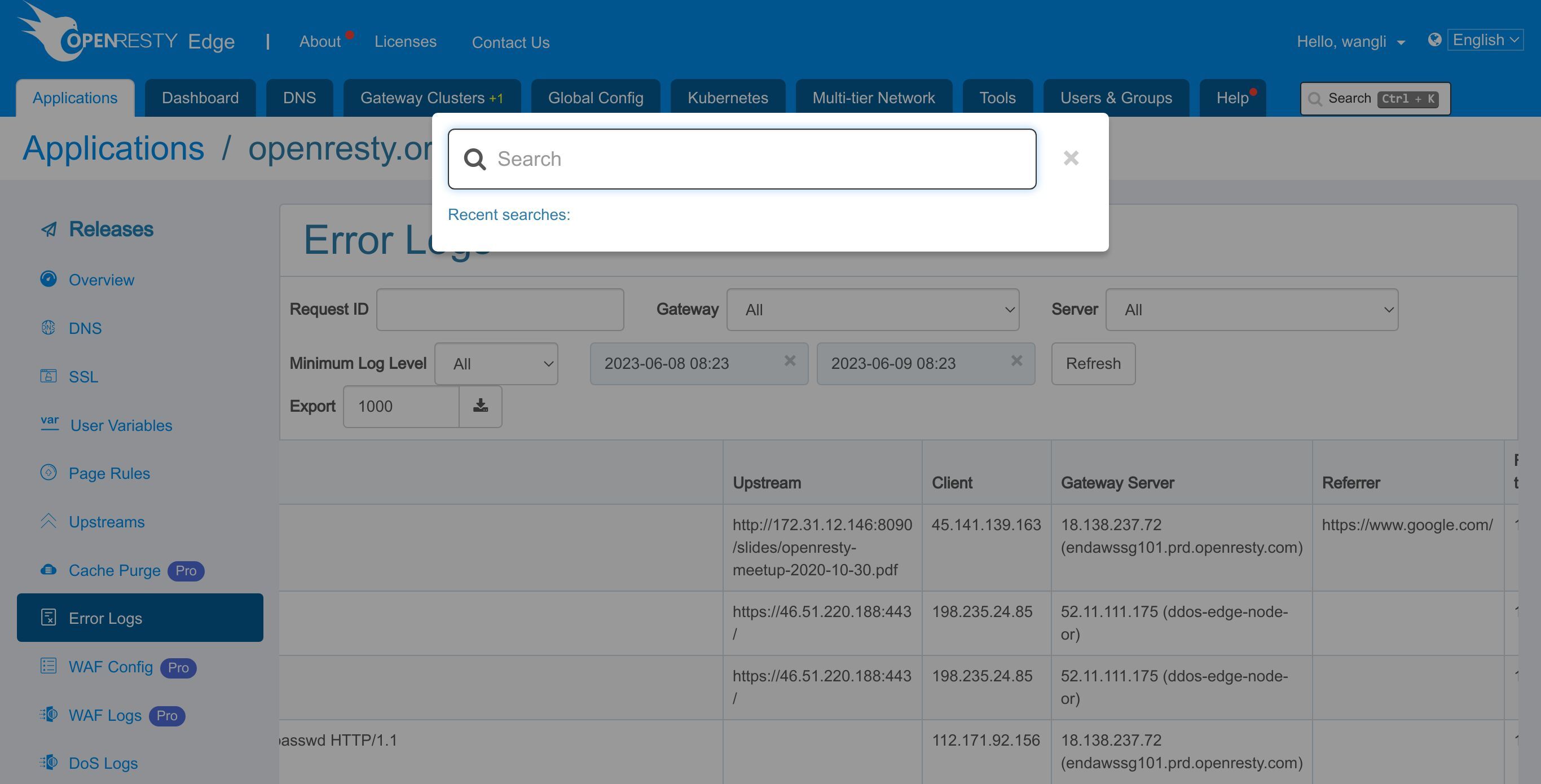
If you have searched before, the search history will be shown below. Now it is empty.
Paste the Request ID we just copied into the search box.
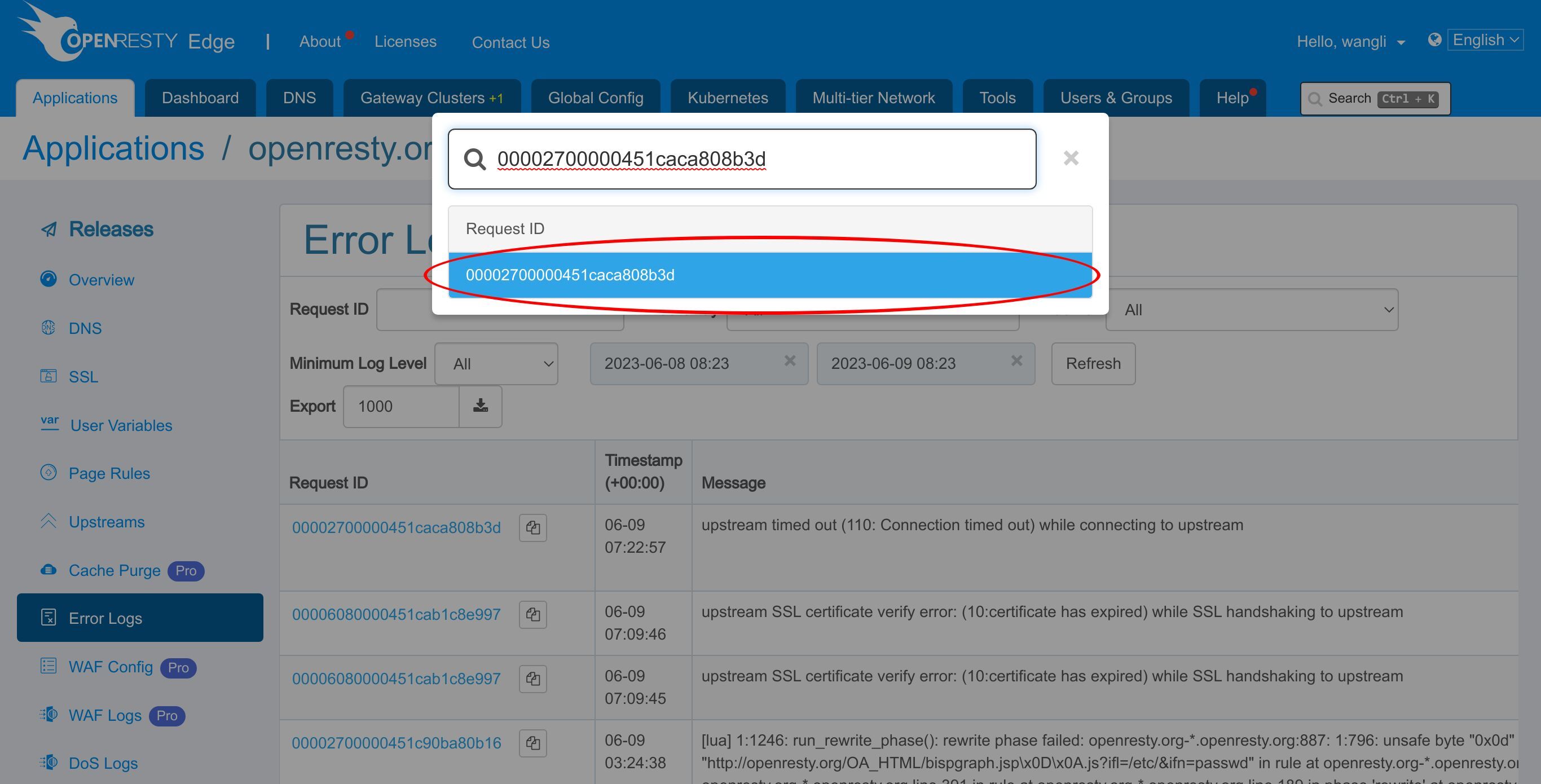
You can see a search result.
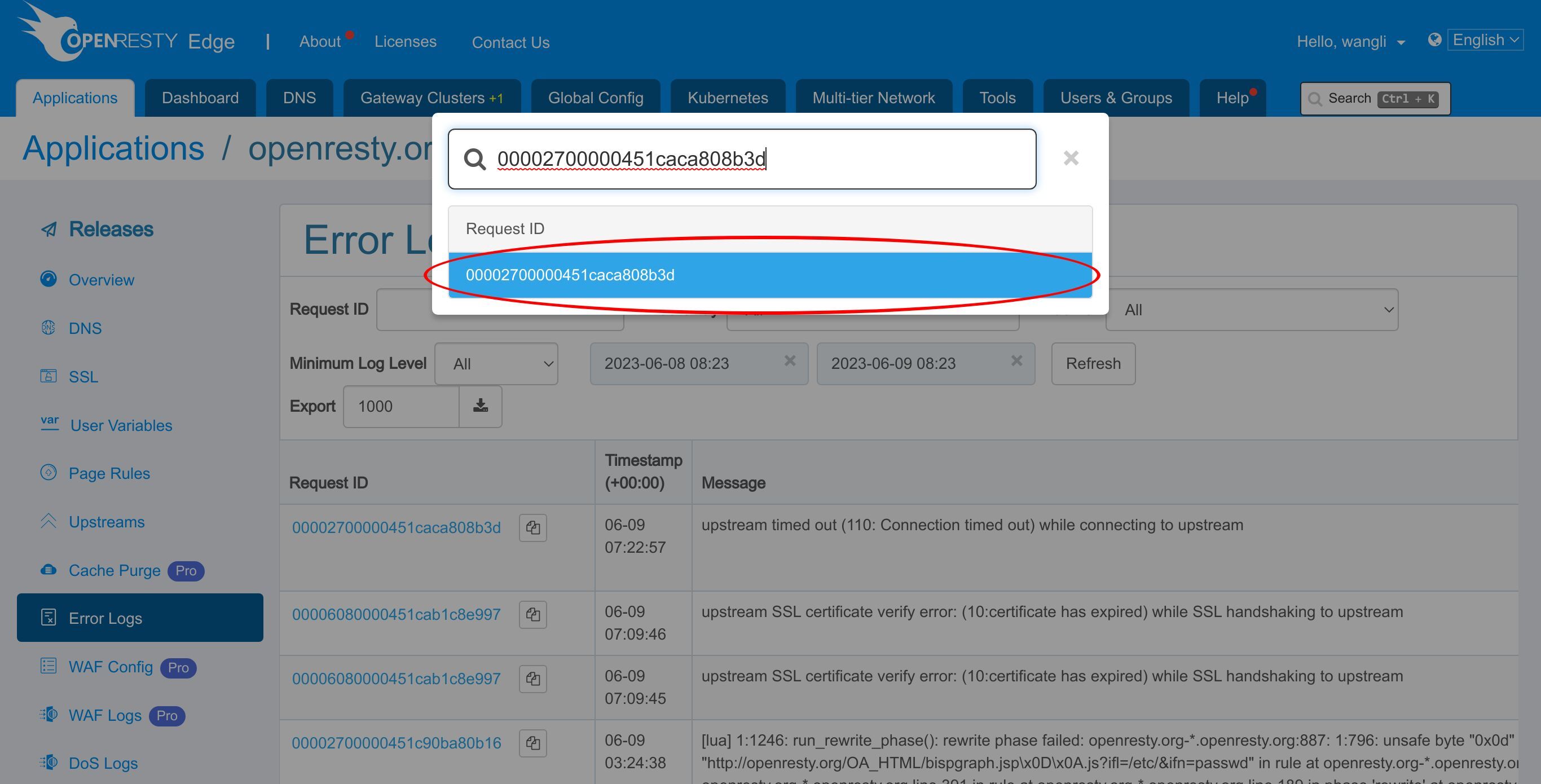
Click this result.
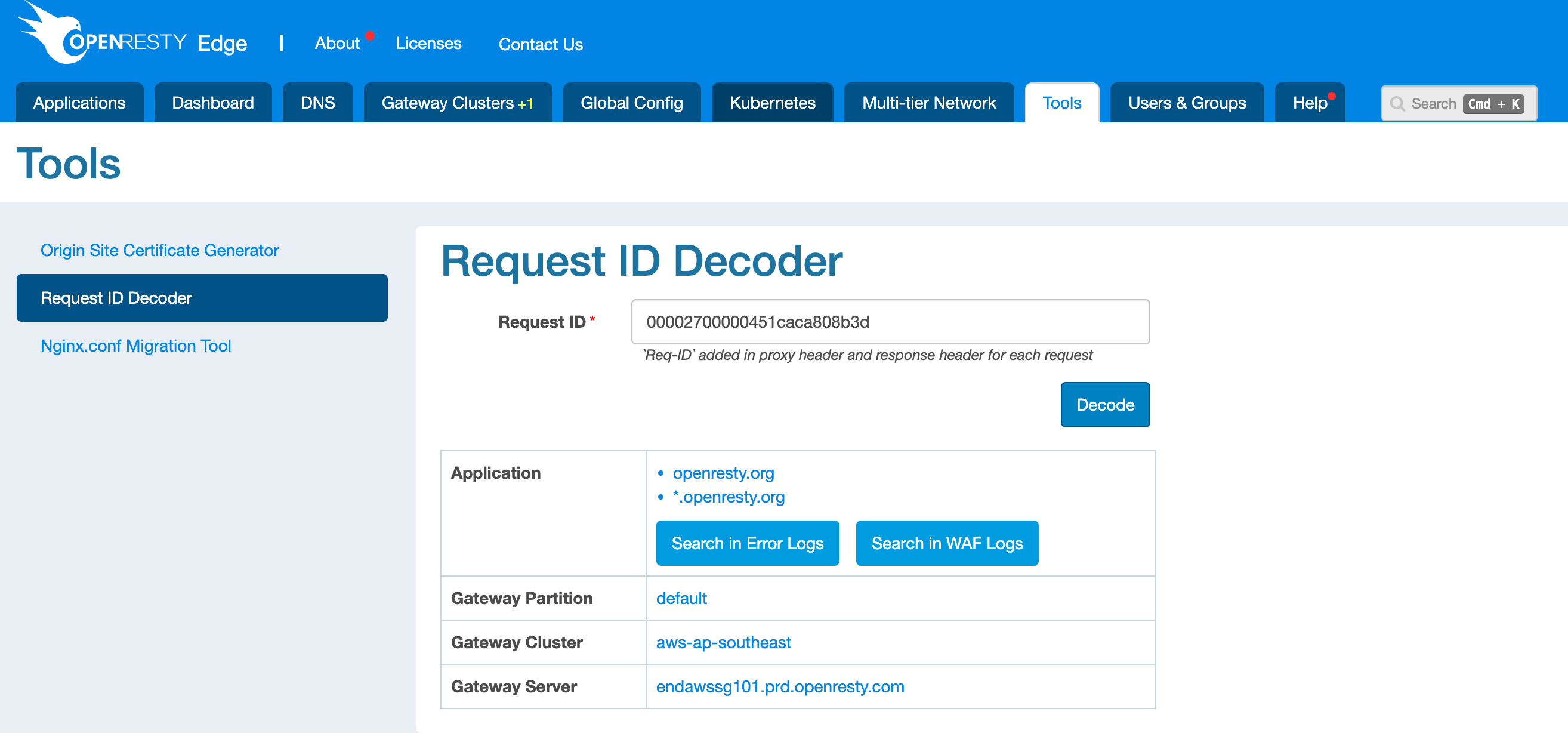
You will enter the Request ID Decoder page. Here you can find some detailed information about this request. Now you know how to search for requests using Request ID. For a deeper walkthrough of using request IDs to troubleshoot problematic requests across OpenResty Edge gateways, see the dedicated tutorial.
Search for Text on the OpenResty Edge Interface
The second searchable type is the text on the interface. Assume that you’re not familiar with the OpenResty Edge interface and forget where you can work with static files.
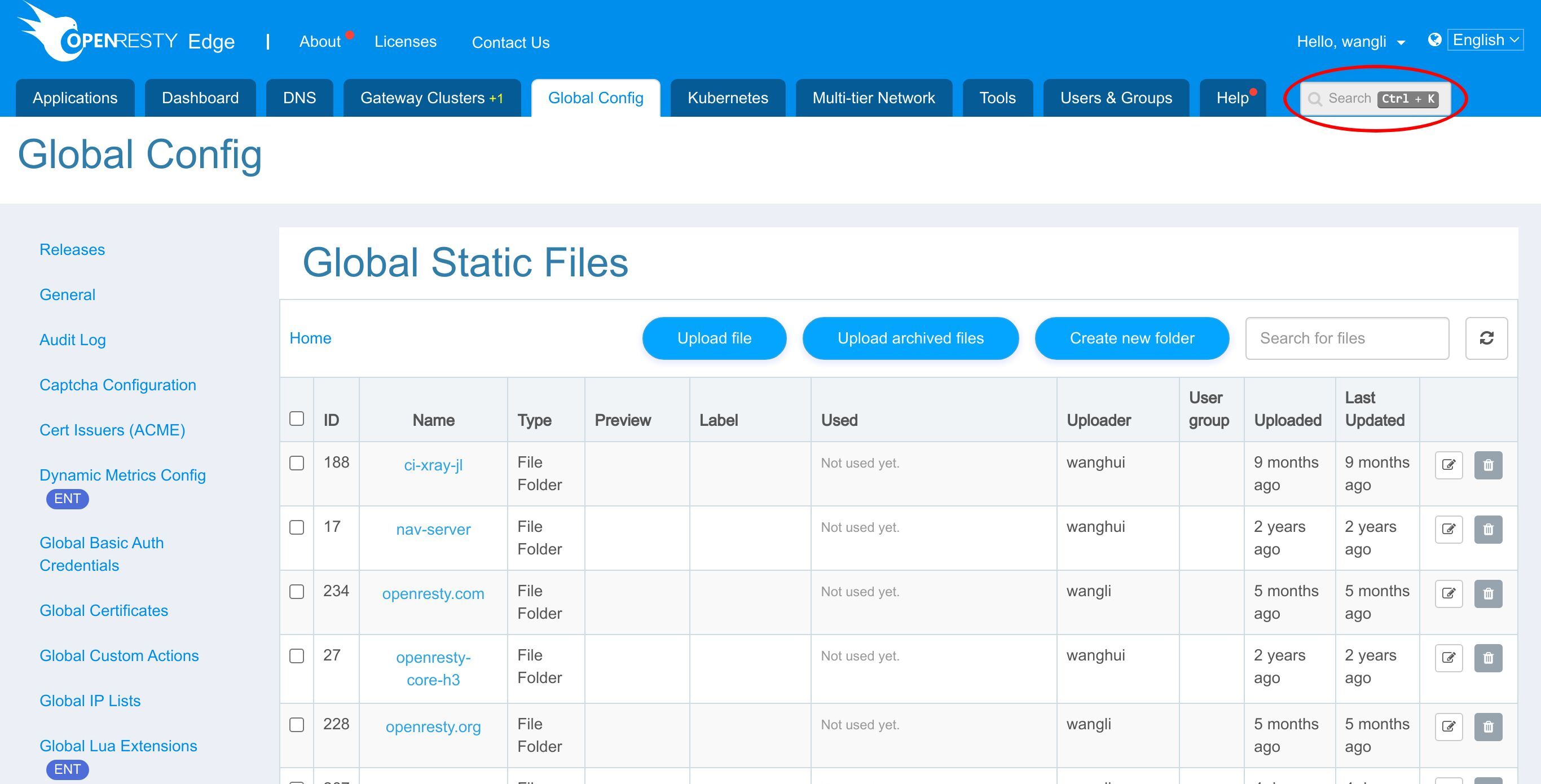
Click to open the search box.
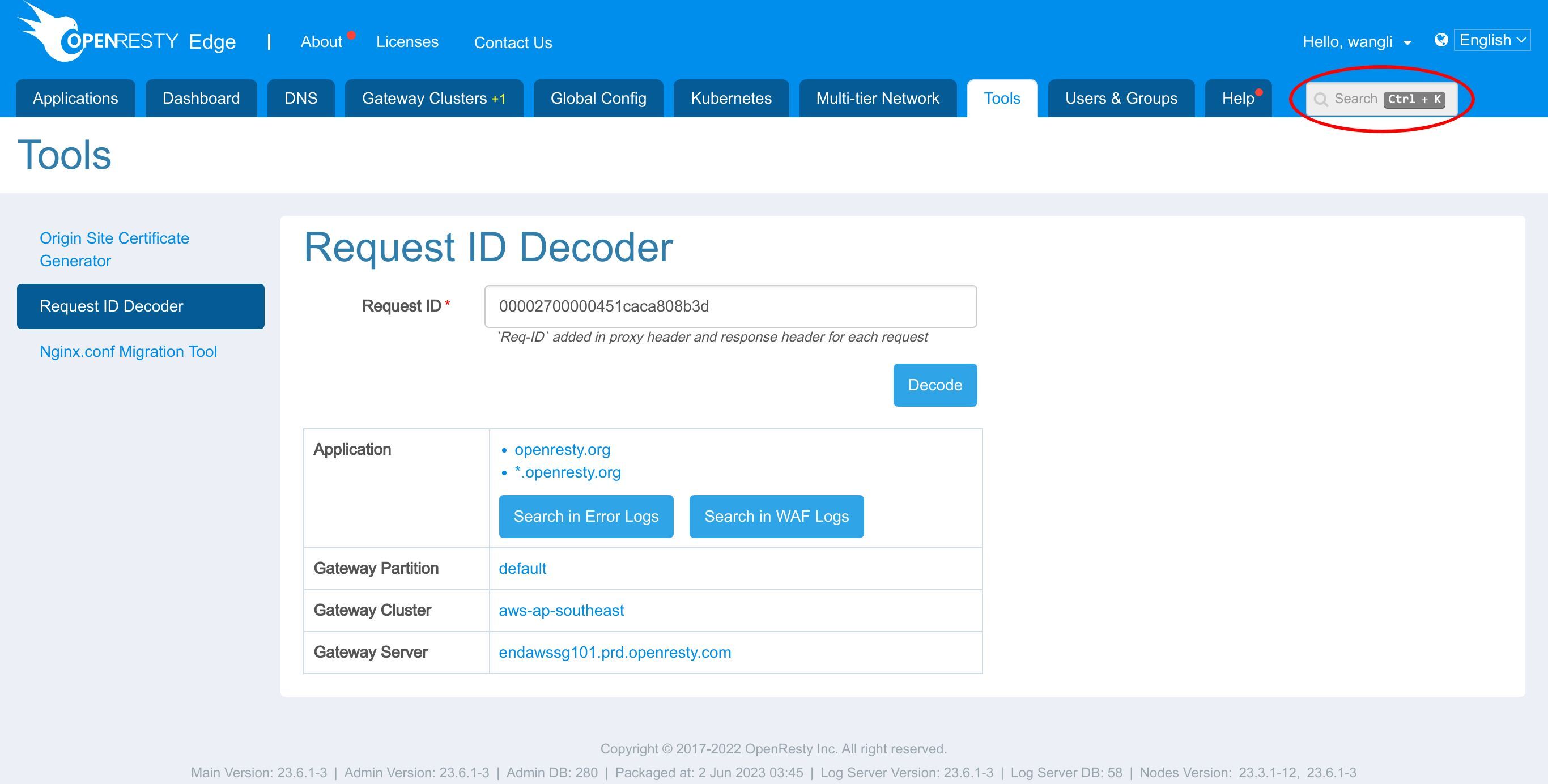
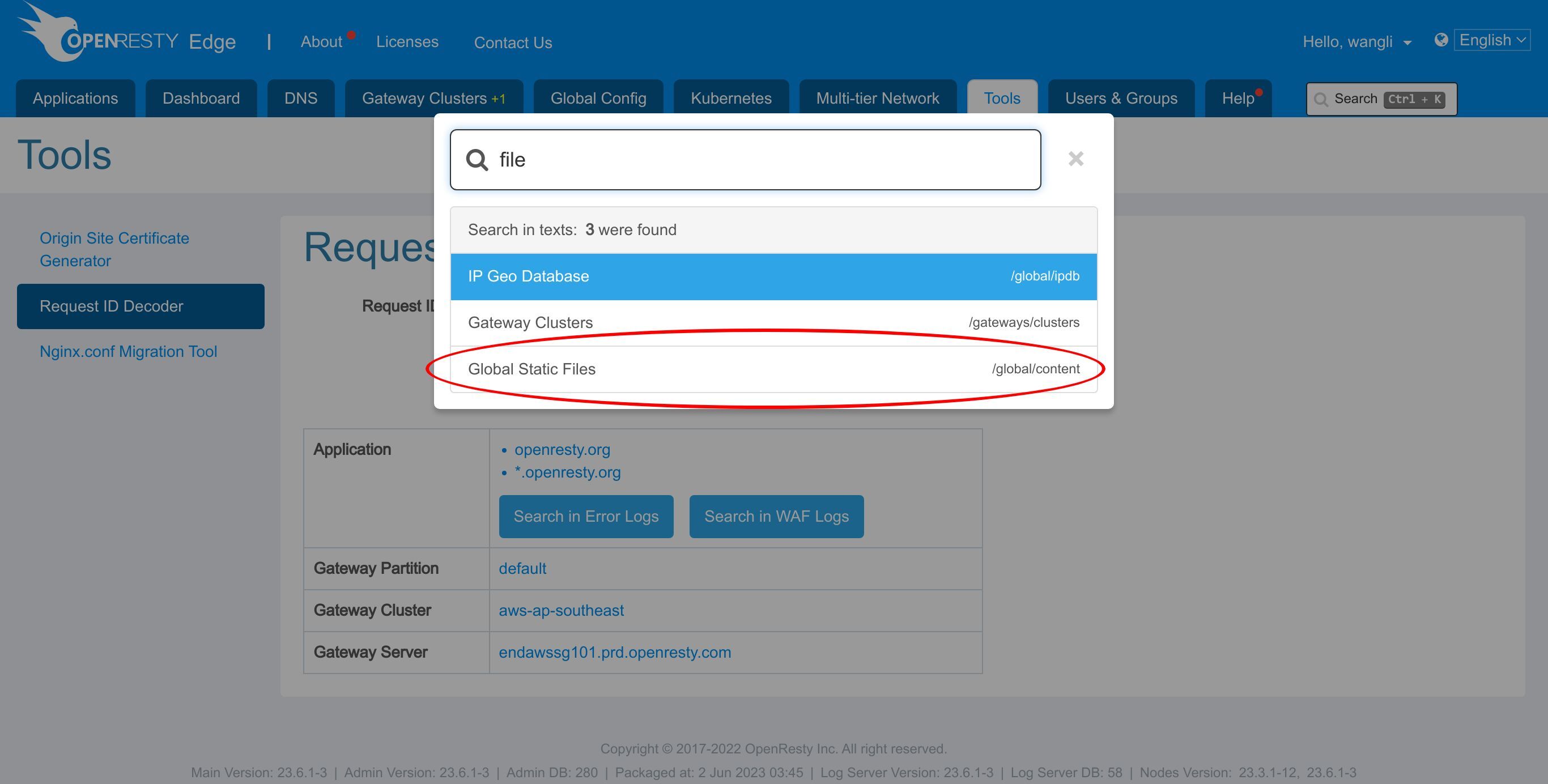
In this case, you can search for “file” in the search box.
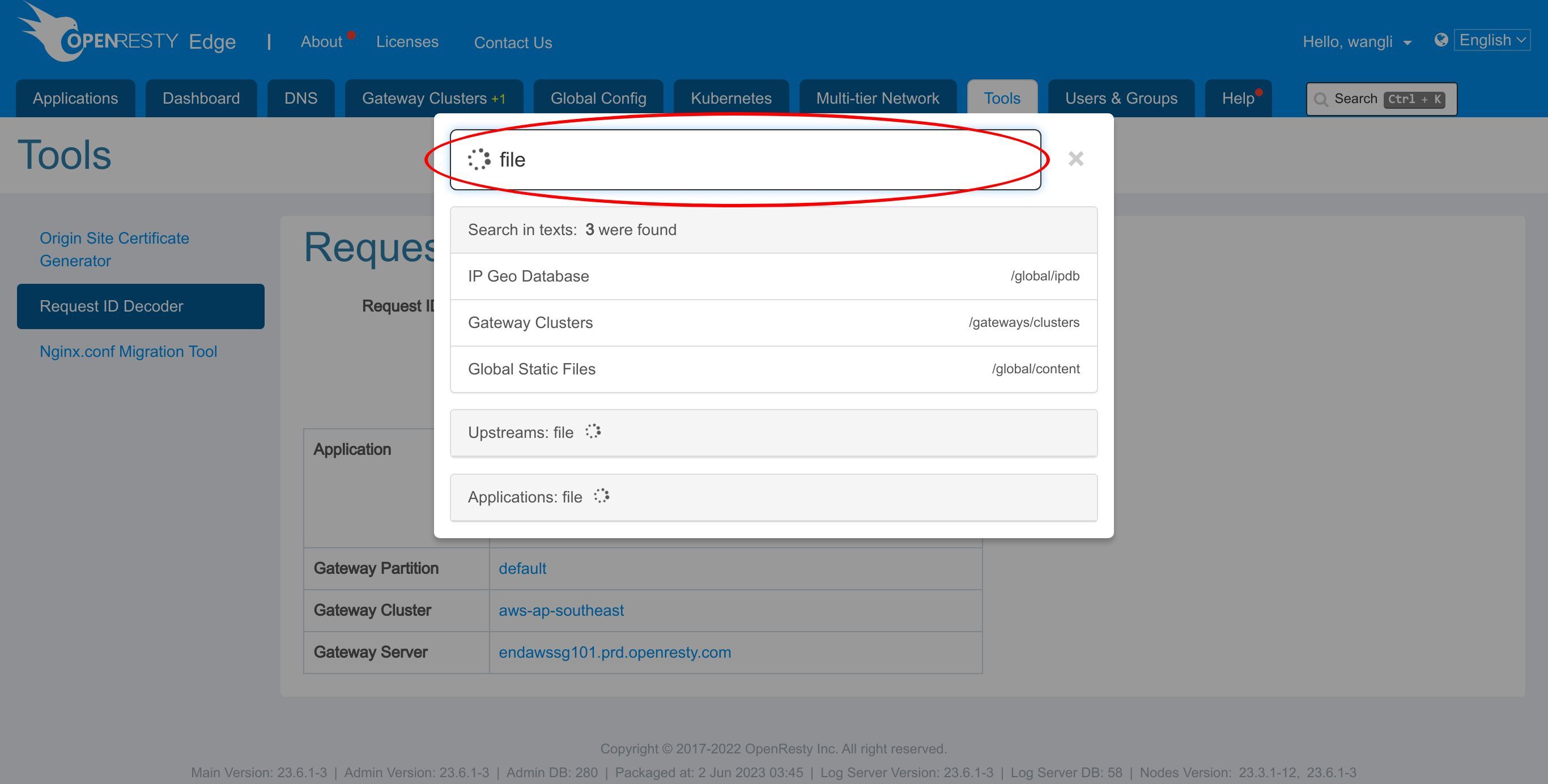
There are three search results.
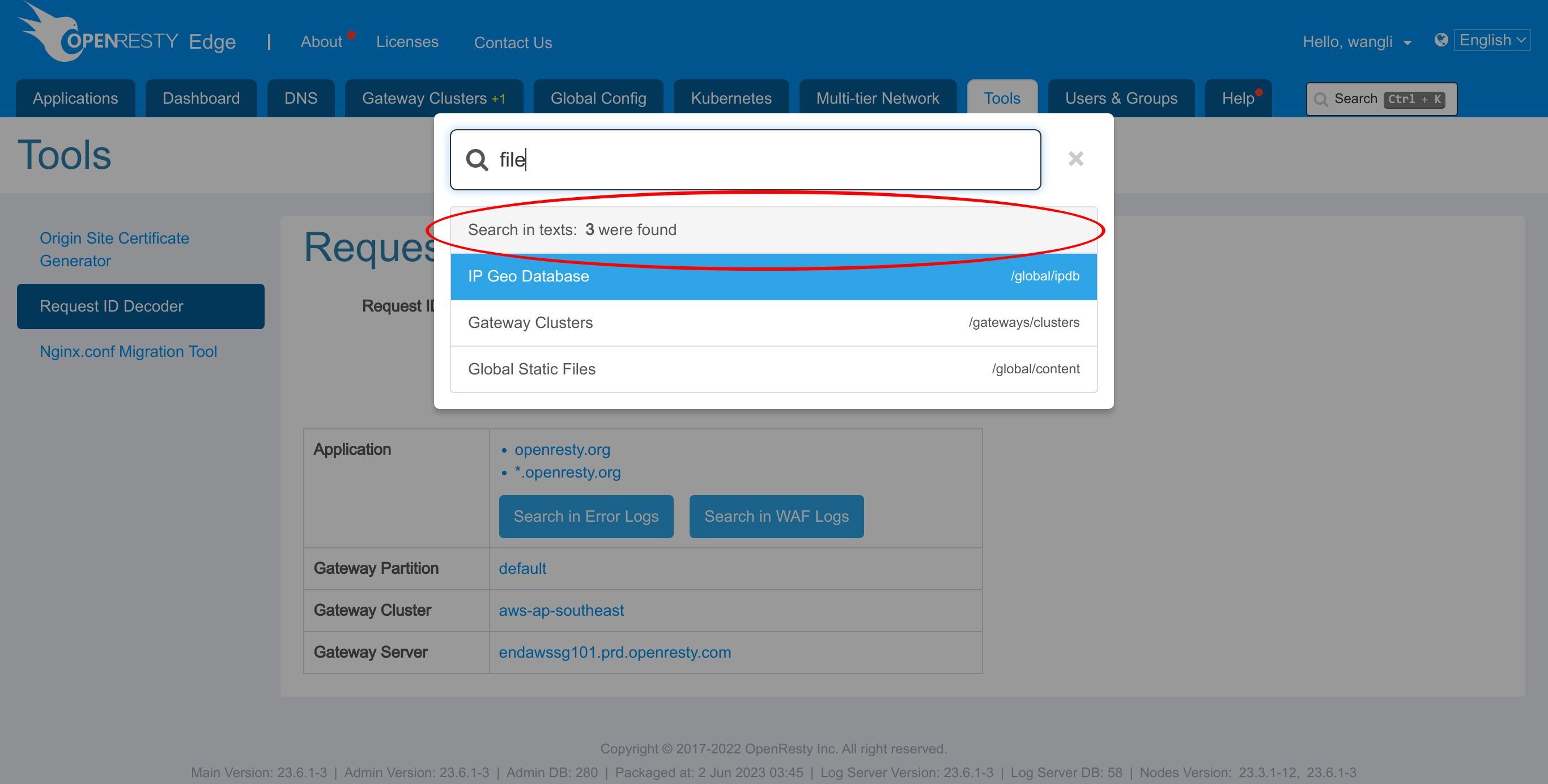
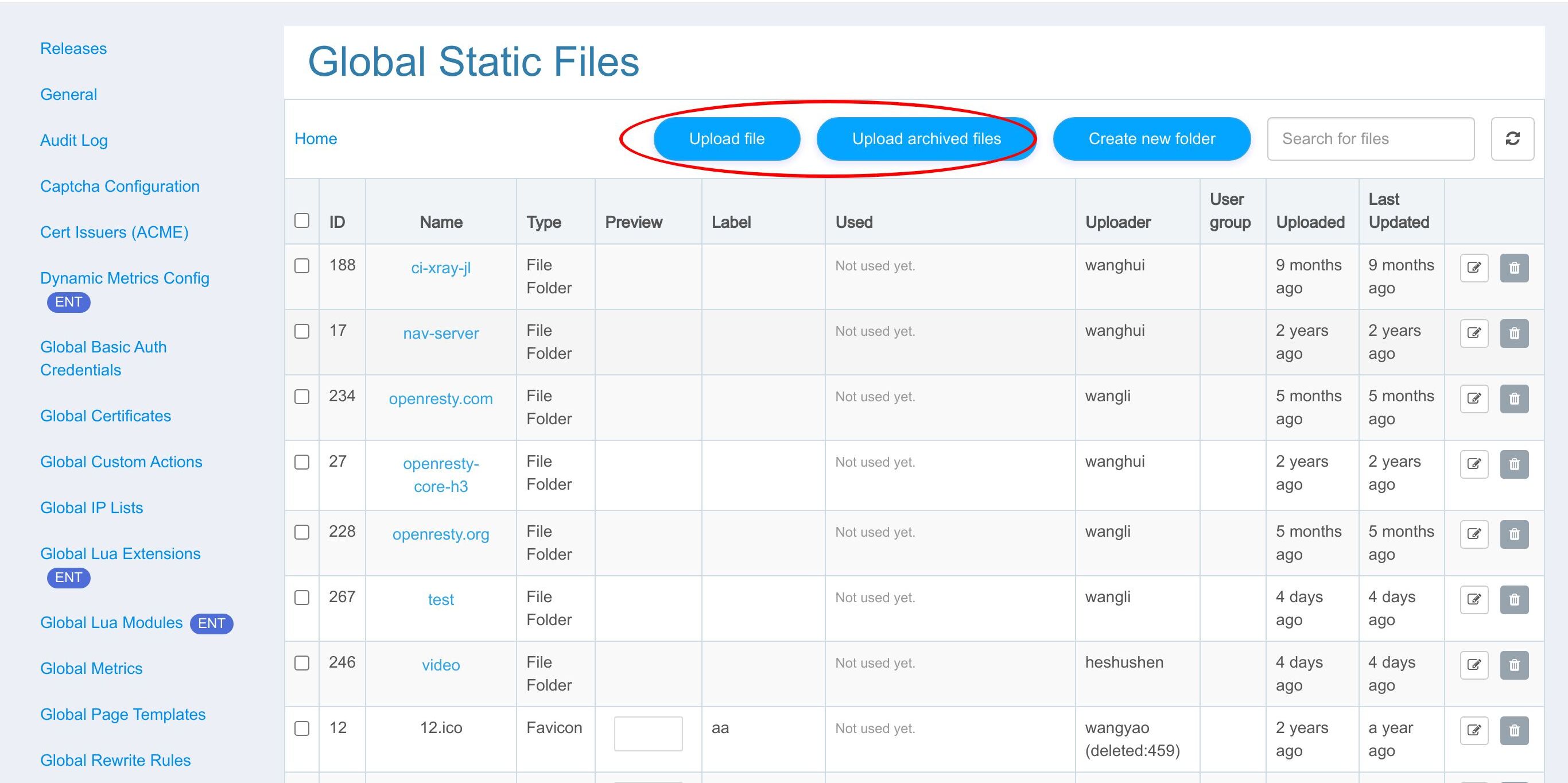
Click the third result to enter the static file page.
You can find this page because it has buttons that contain the text “file”.
Search for Upstreams by IP Address or Name
You can also search for upstreams by IP addresses or names. First, let’s see how to search upstreams by their IP addresses.
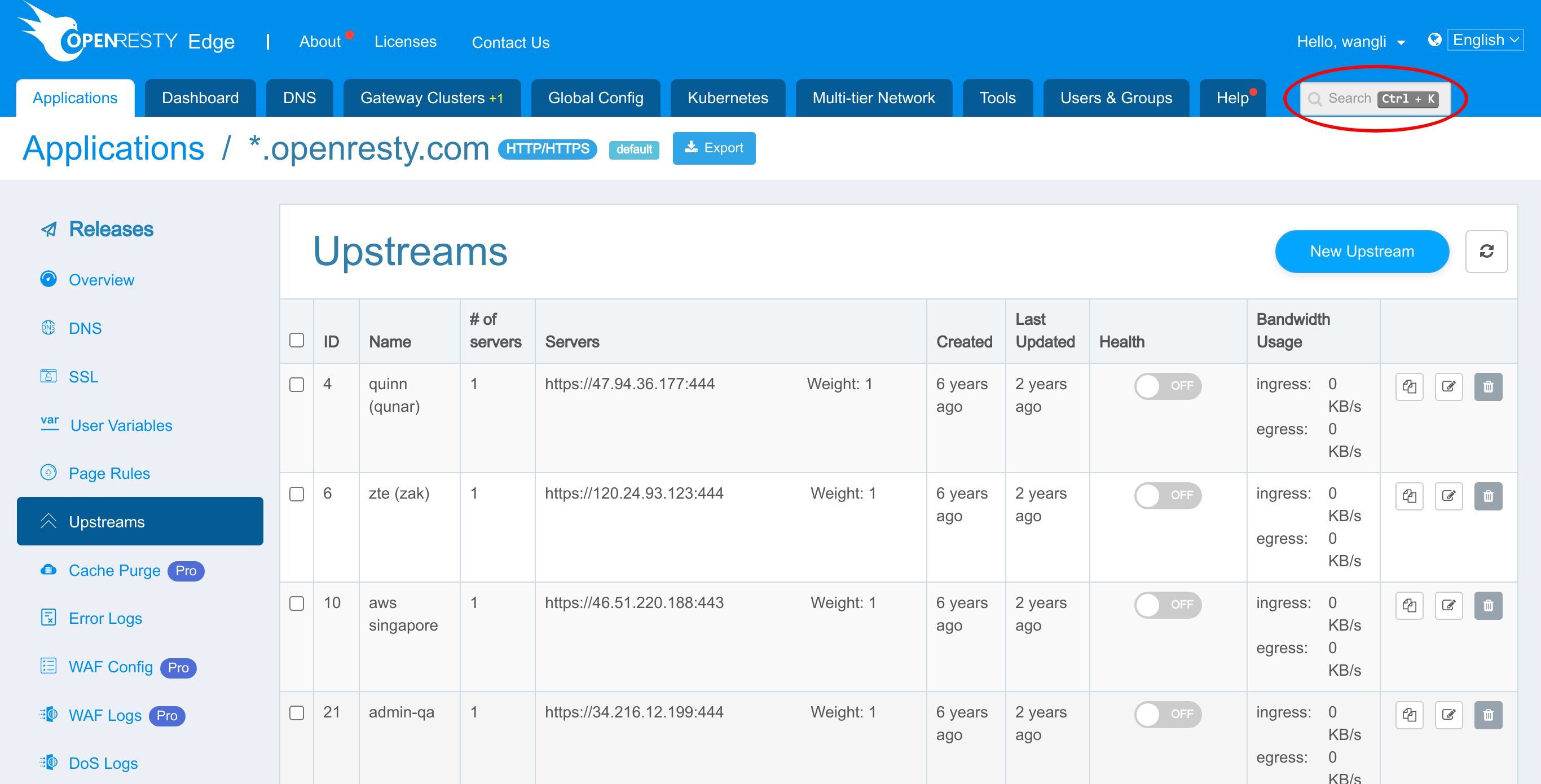
Click to open the search box again.
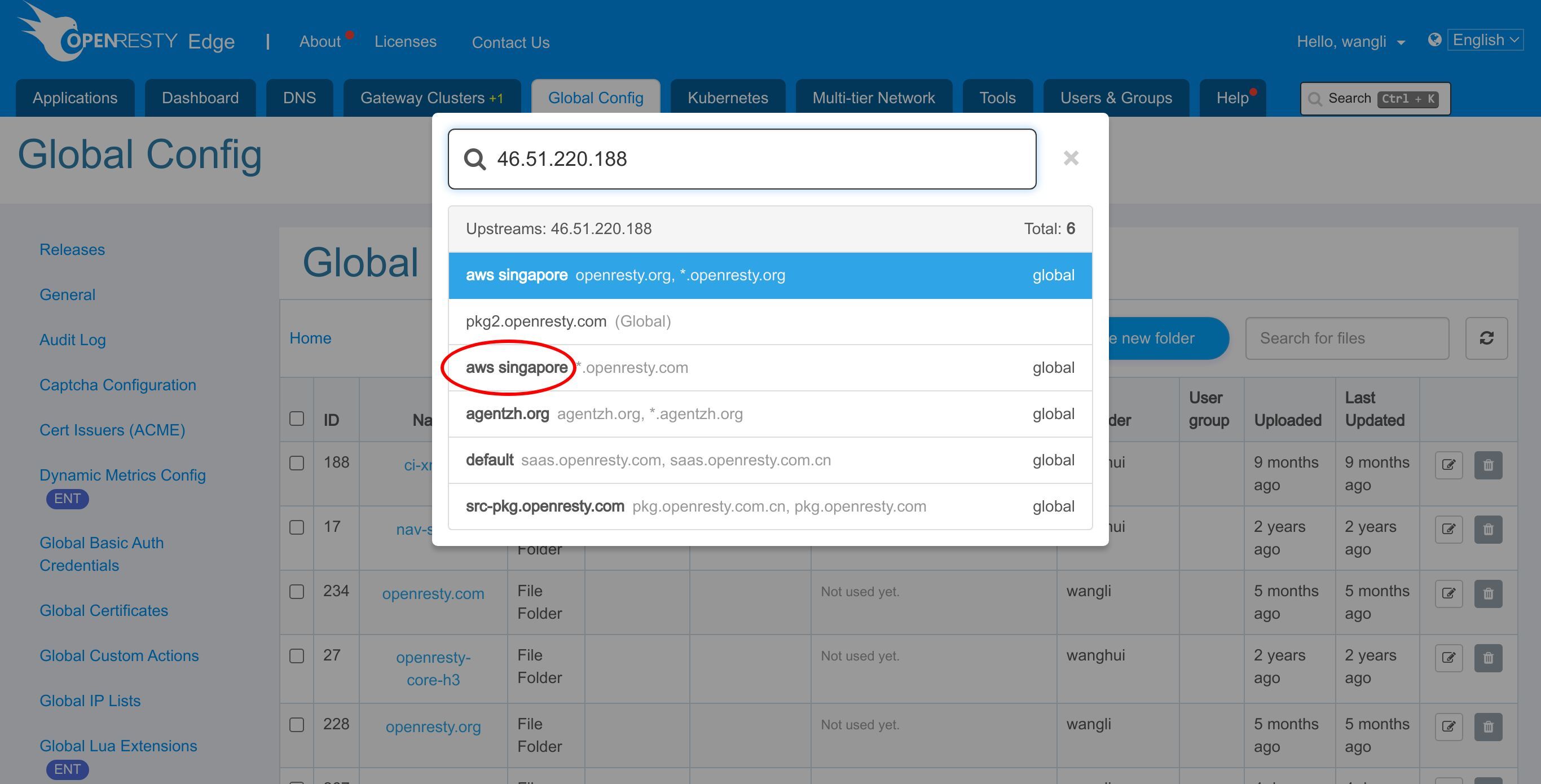
Enter an IP address ending with .188.
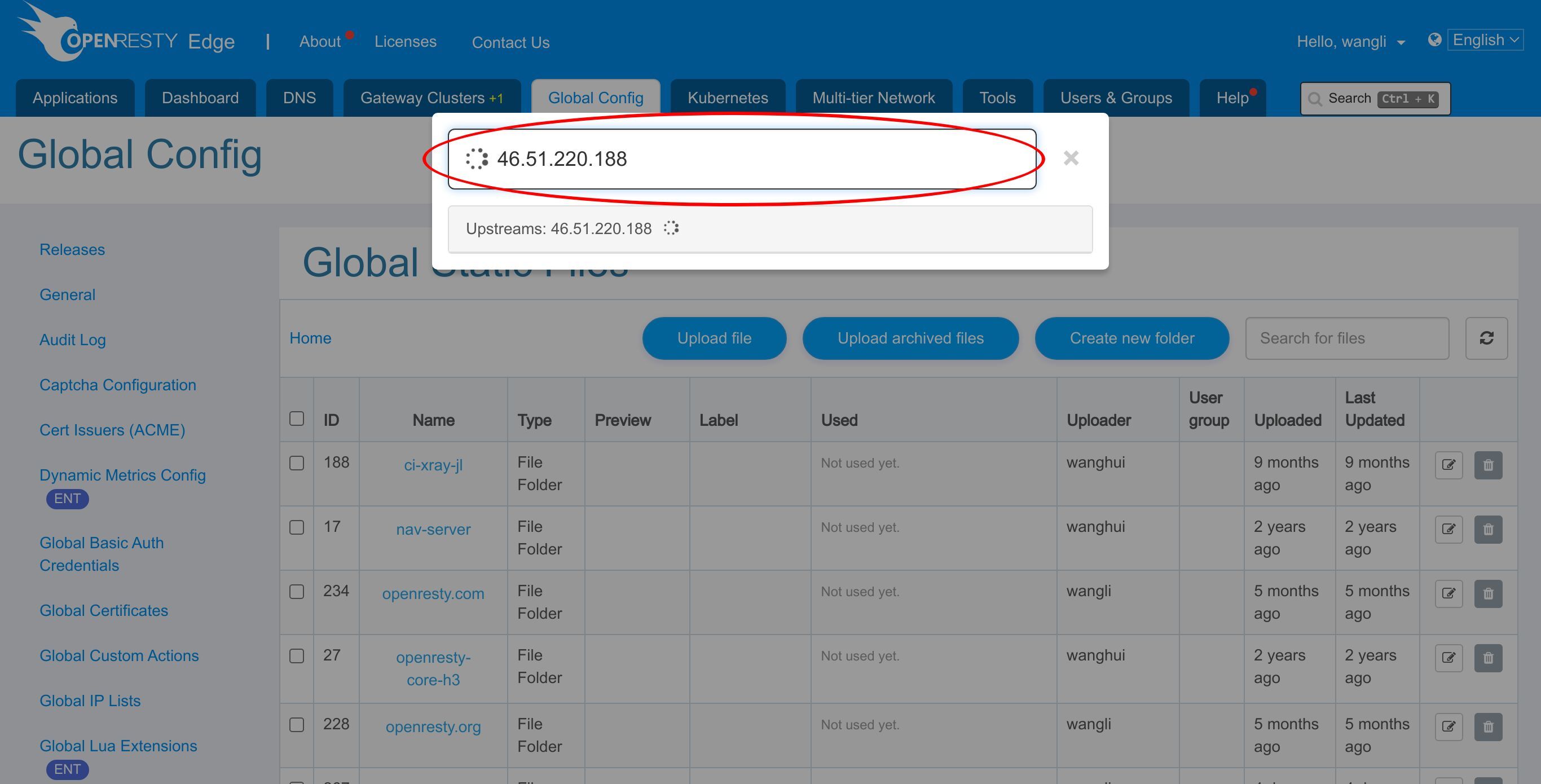
You find 6 results.
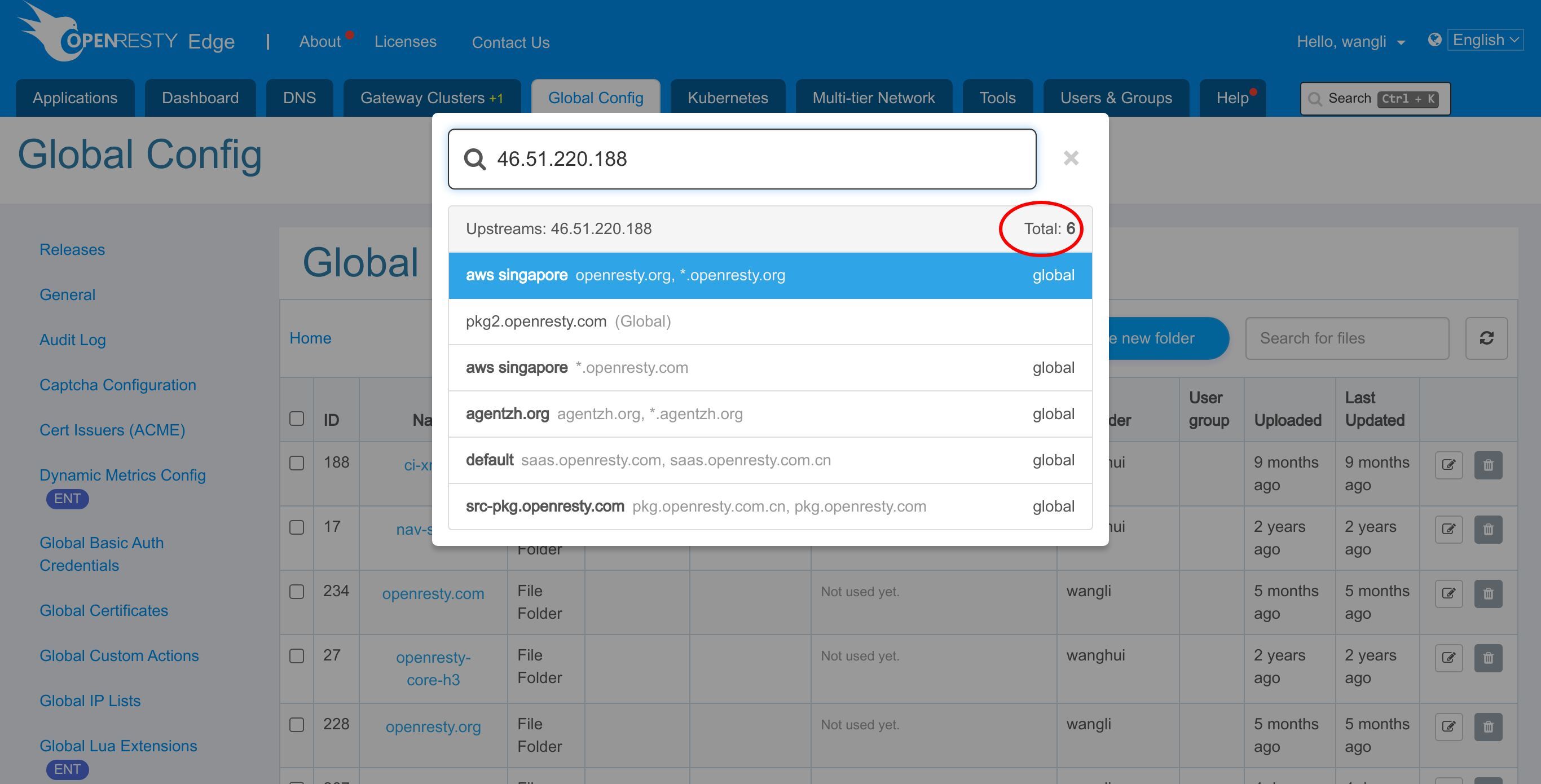
You see upstream names in the search results.
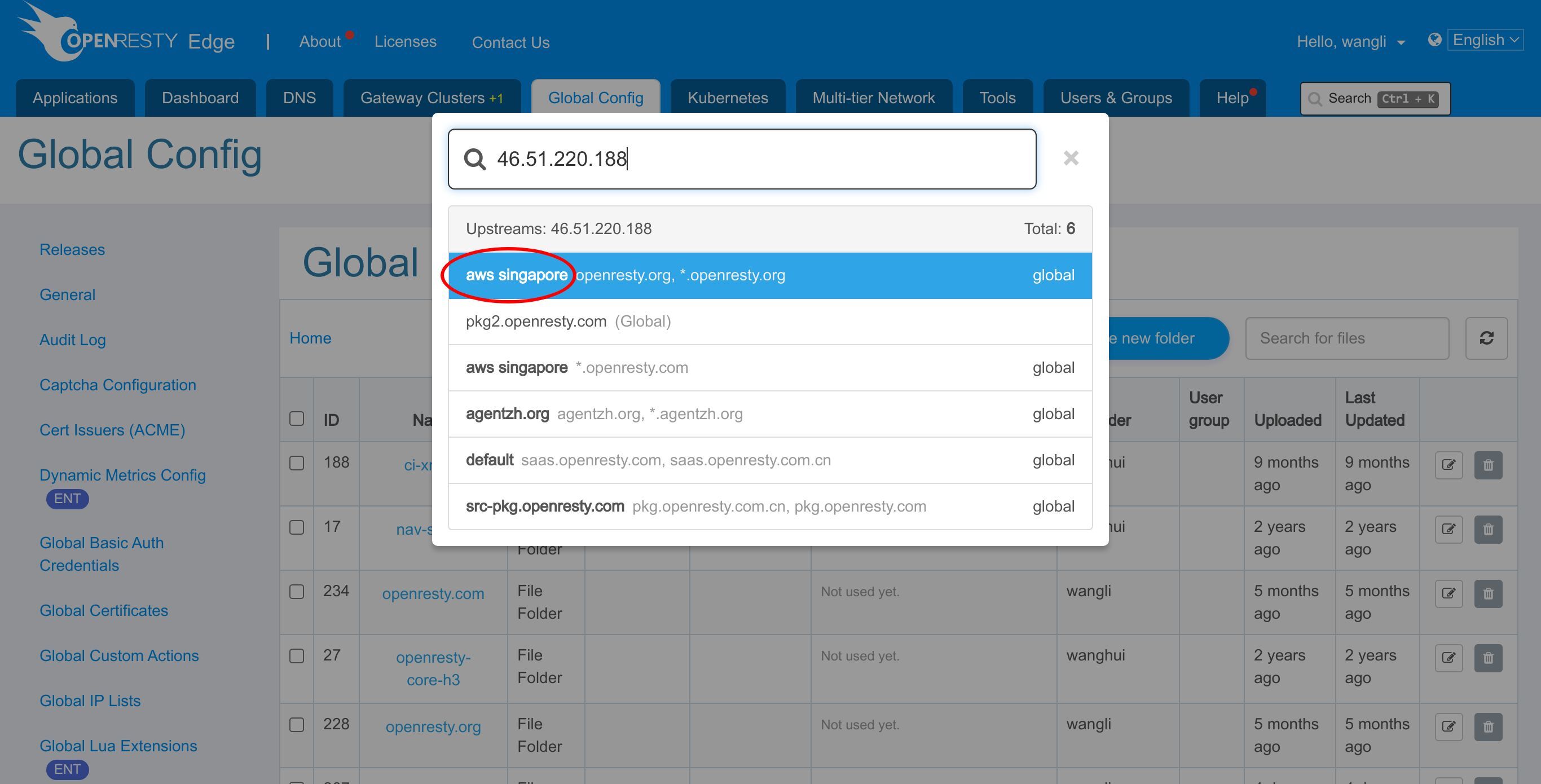
The application name.
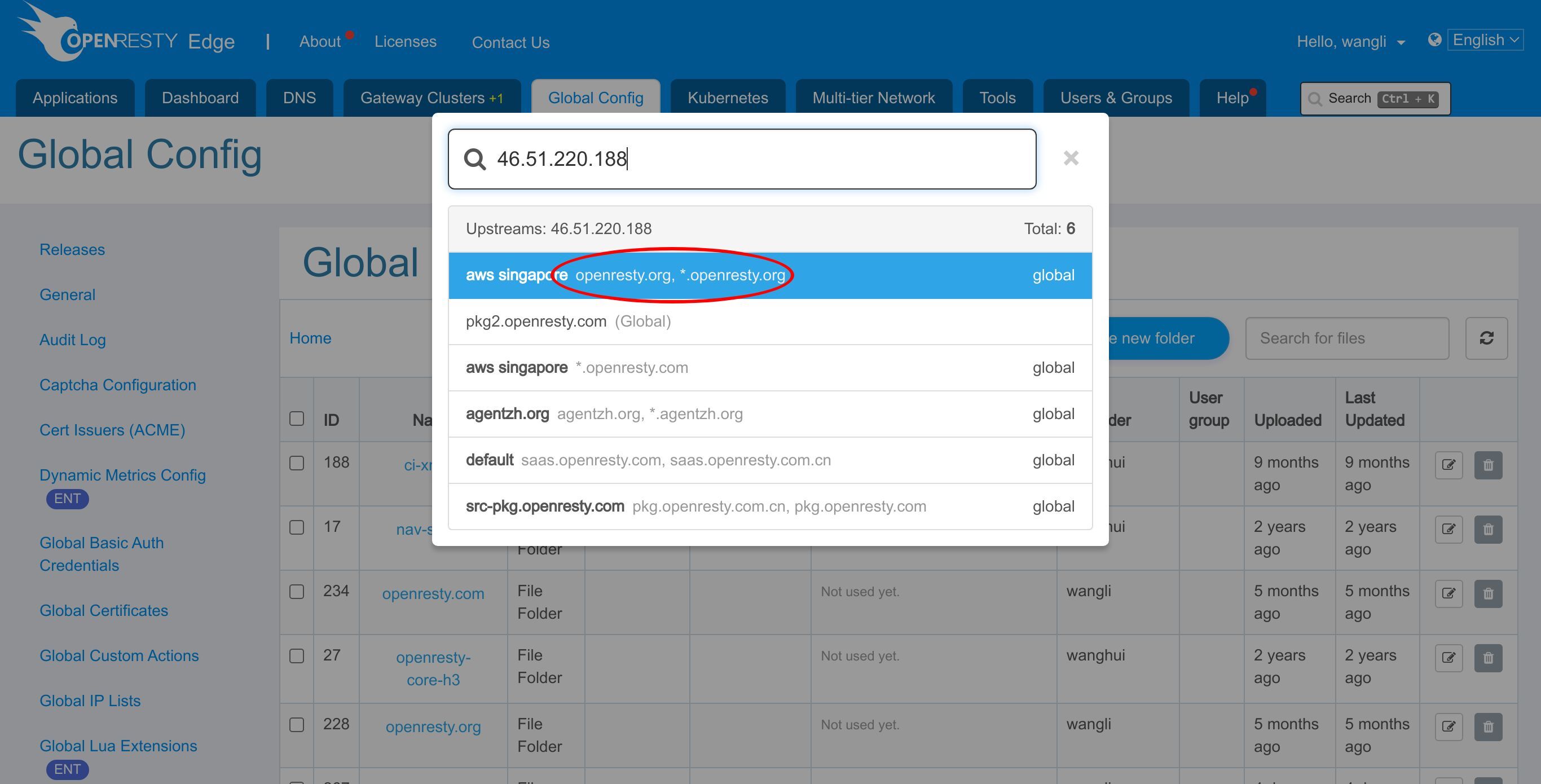
There is no application name here, and the Global in parentheses means that it is a global upstream.
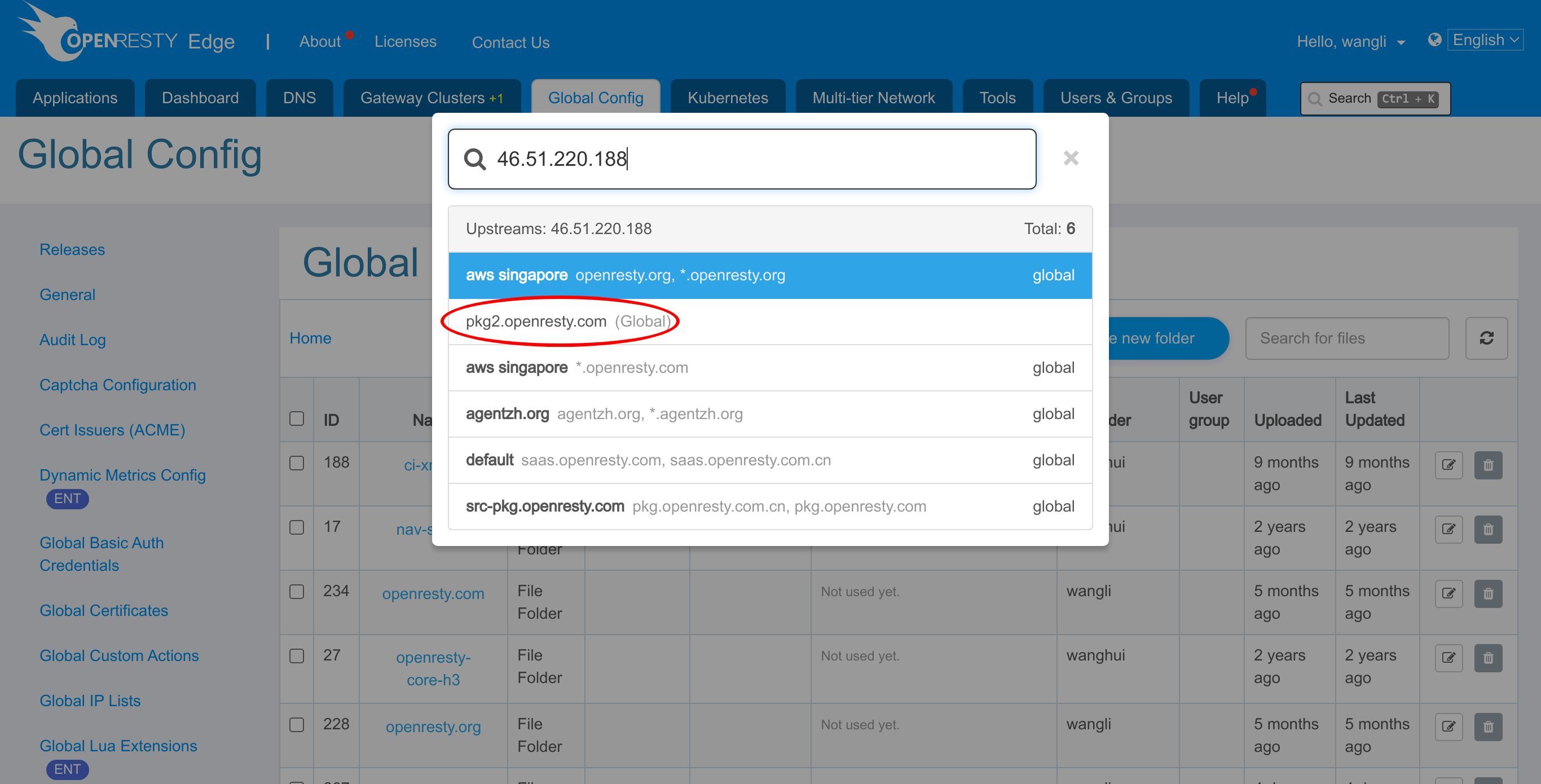
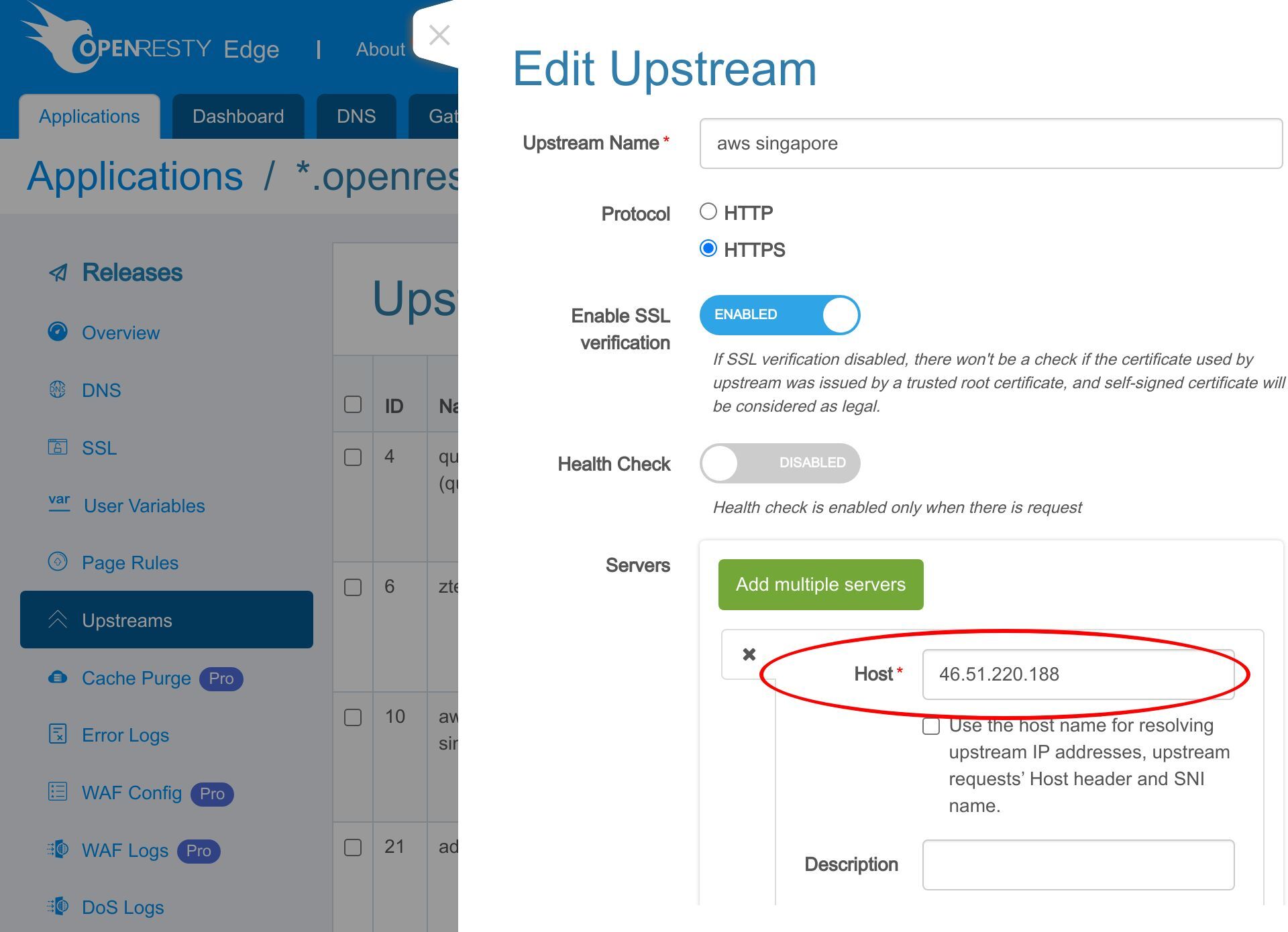
Click the third result. You will go to the application and open the Edit Upstream panel.
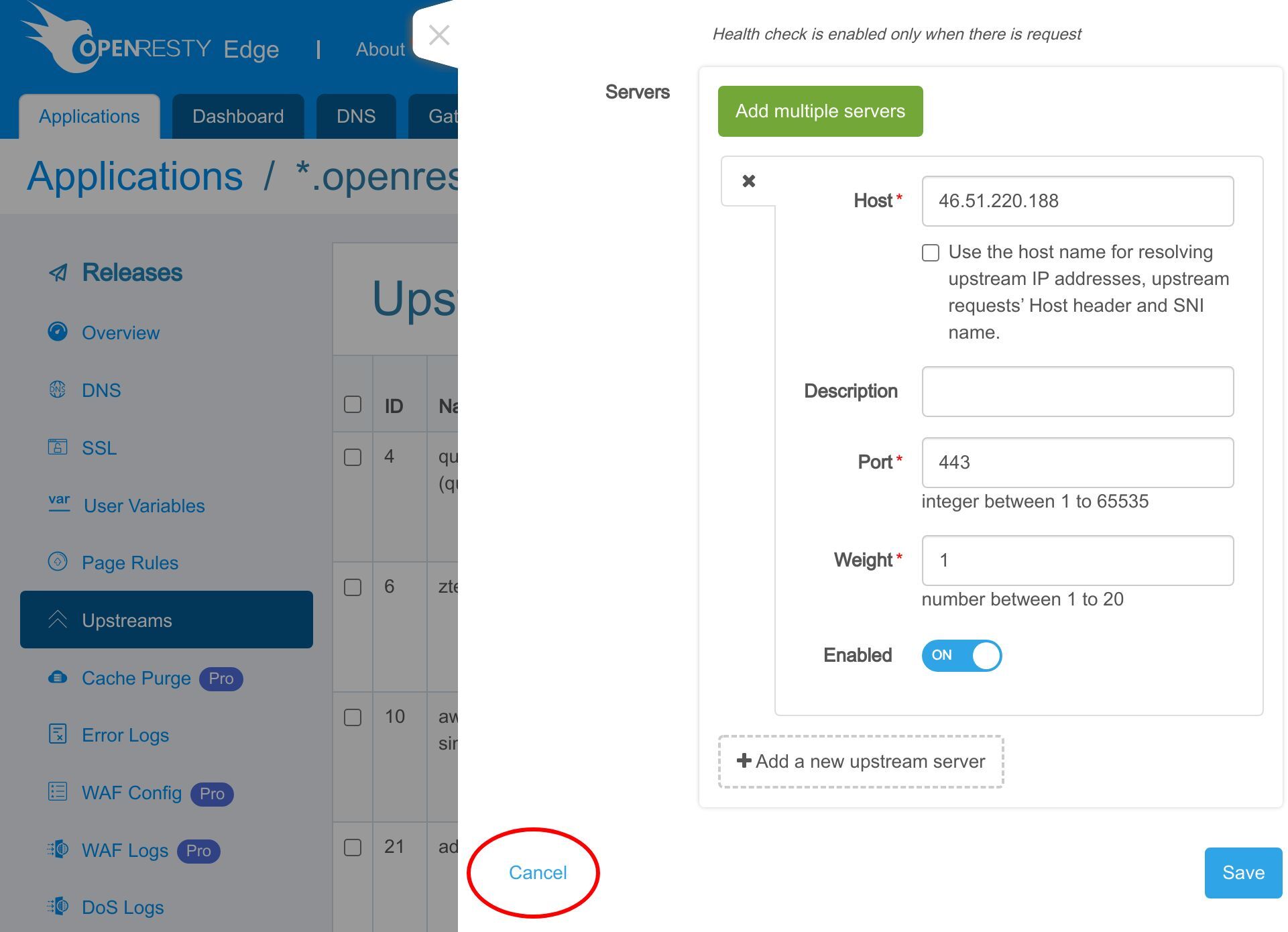
Look at the host of this upstream, which is exactly the IP address ending with .188.
Click to close this panel.
Upstreams can also be searched by names.
Enter “github” into the search box
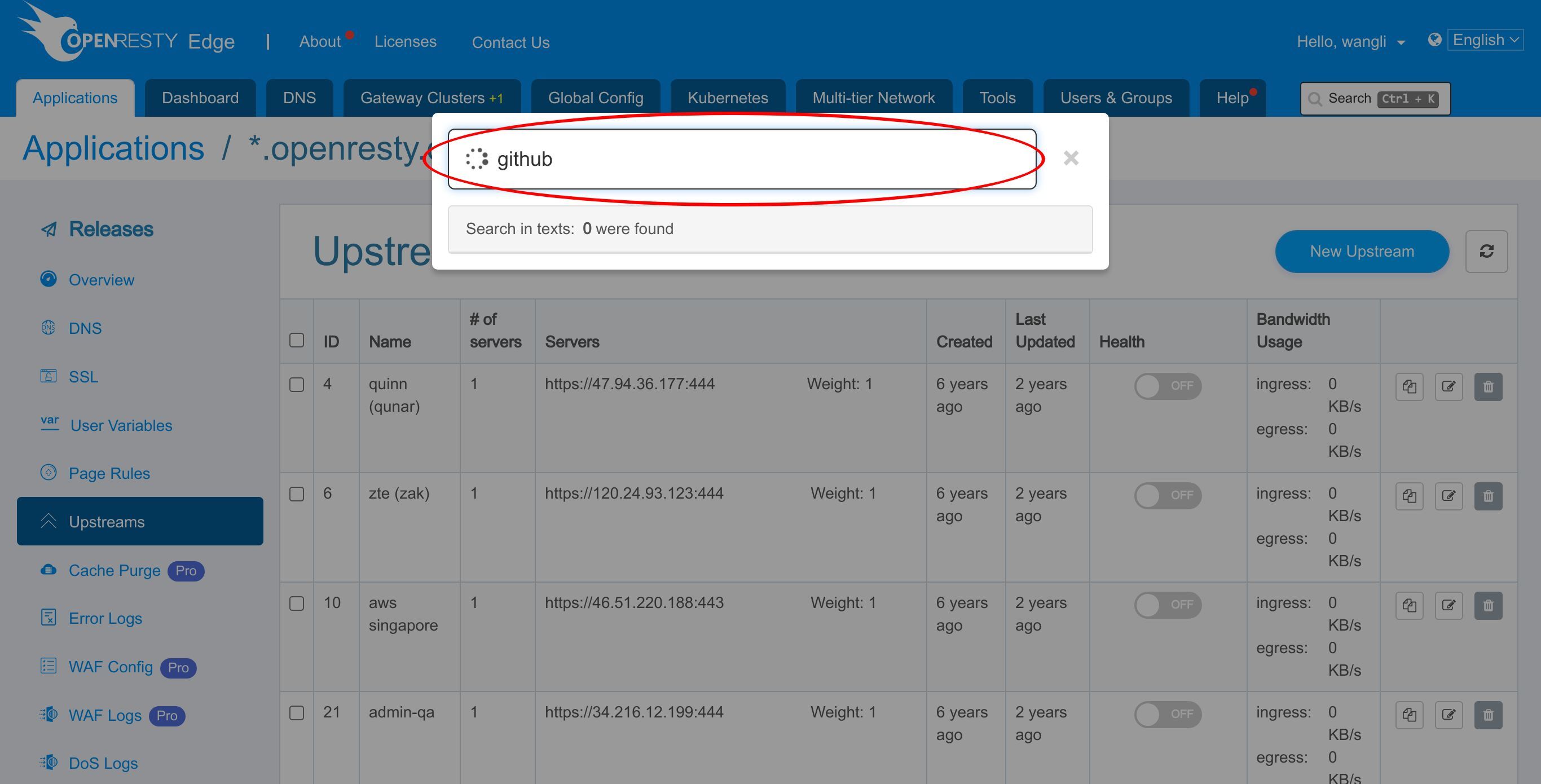
You find 4 upstreams that have name that contains “github”.
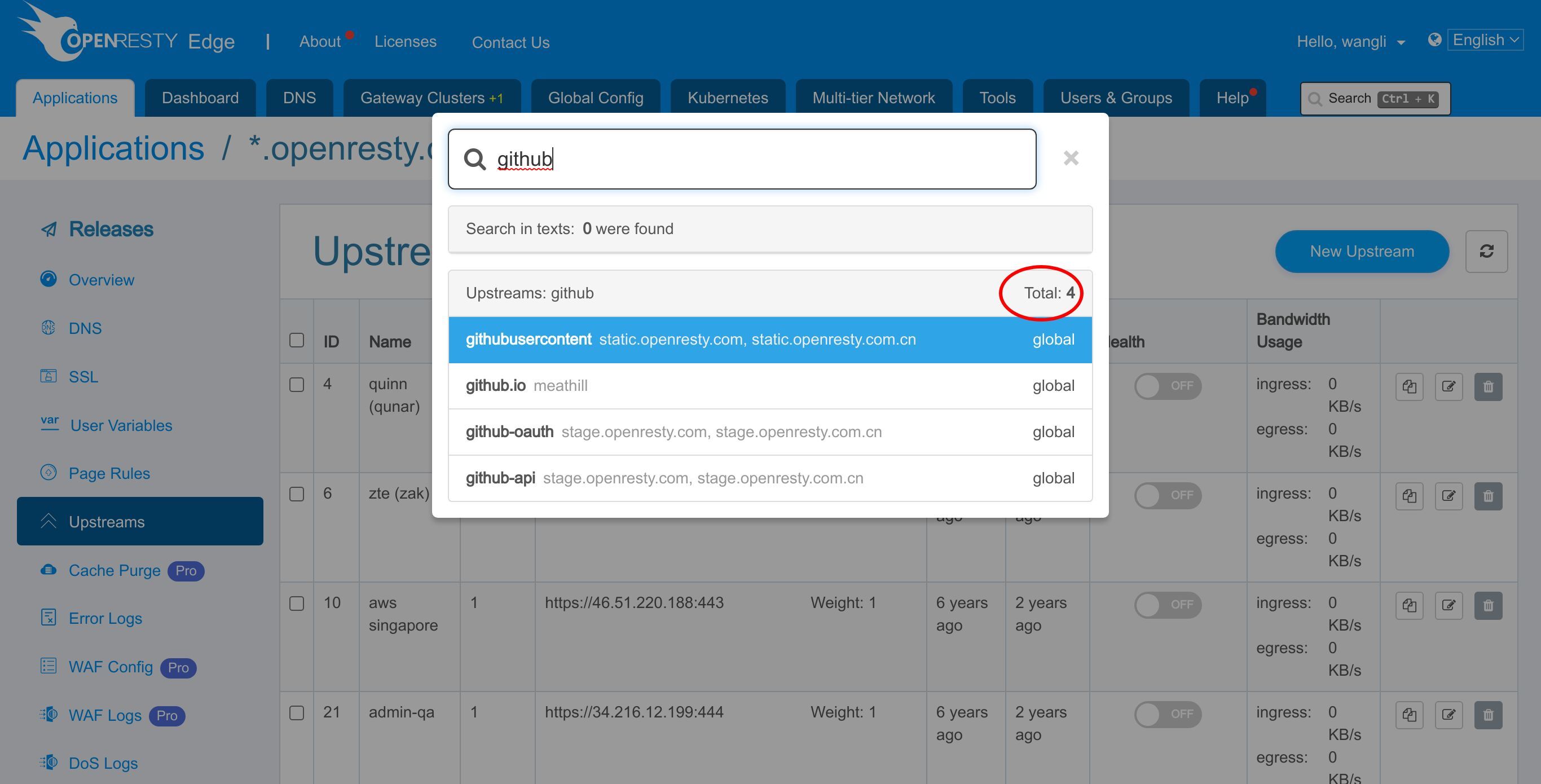
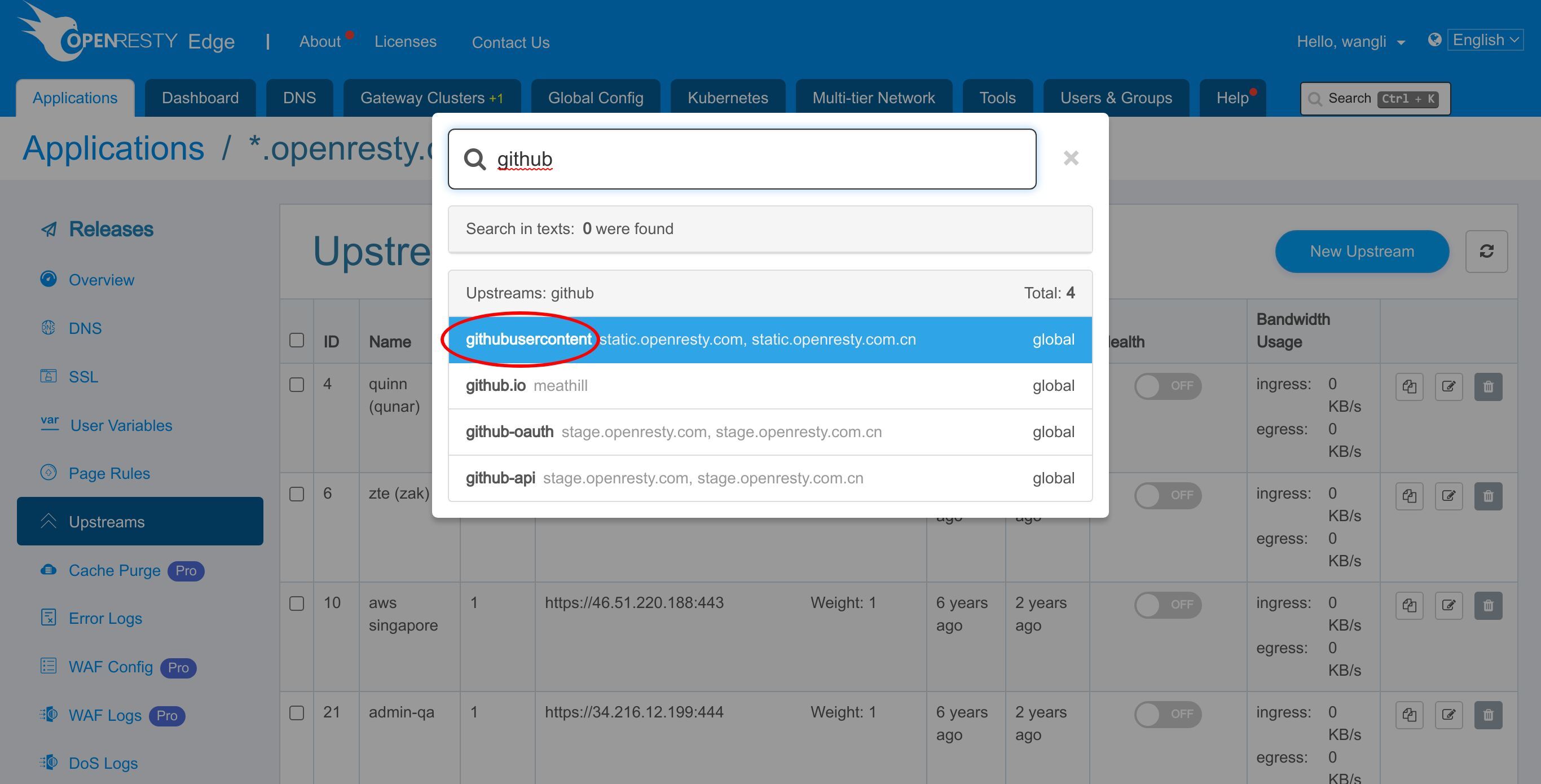
Click to enter the first upstream.
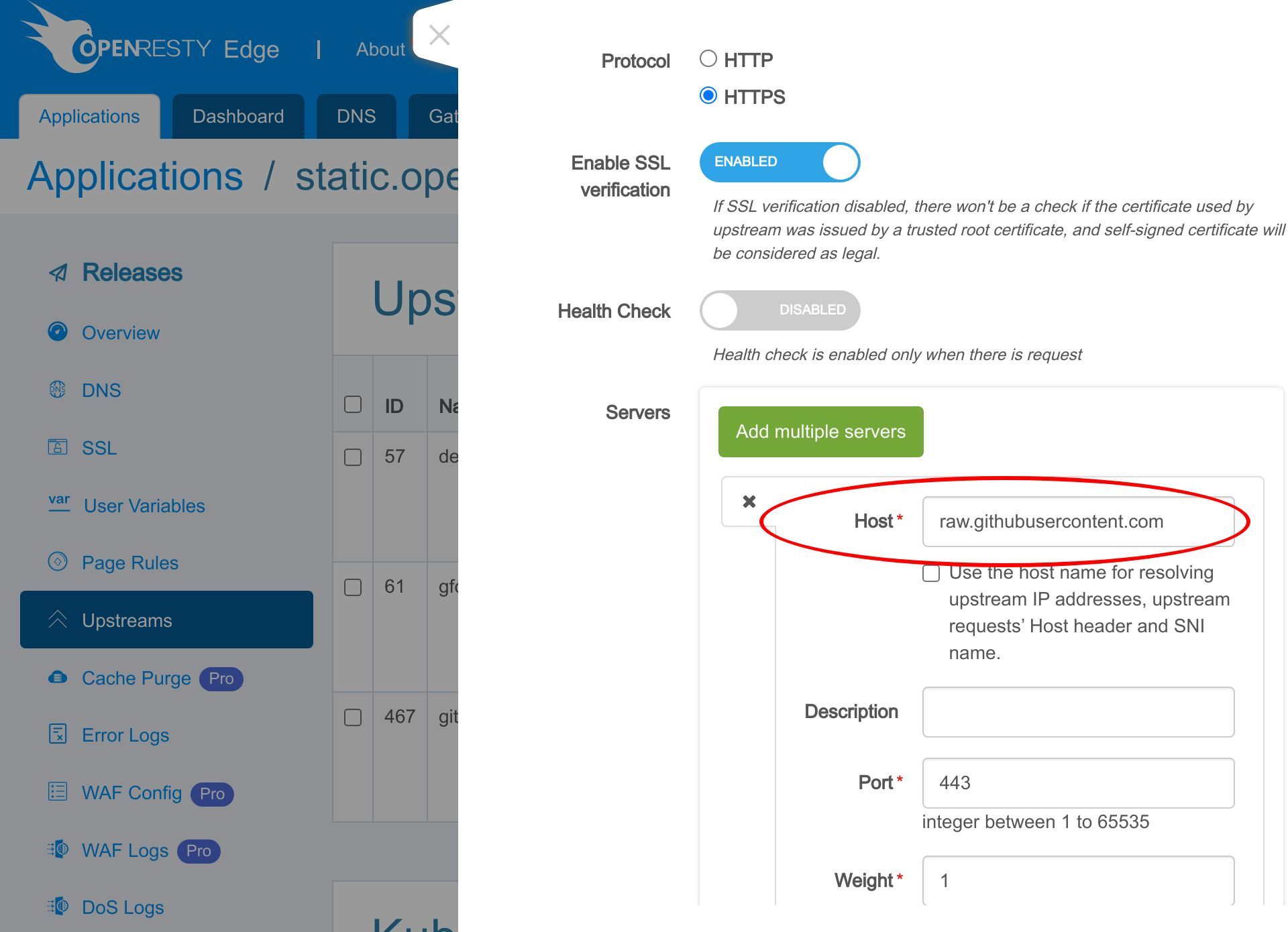
Look at the host of this upstream, which contains the text “github”.
Click to close this panel.
Search for Applications by Name
Similarly, you can search for applications by their names.
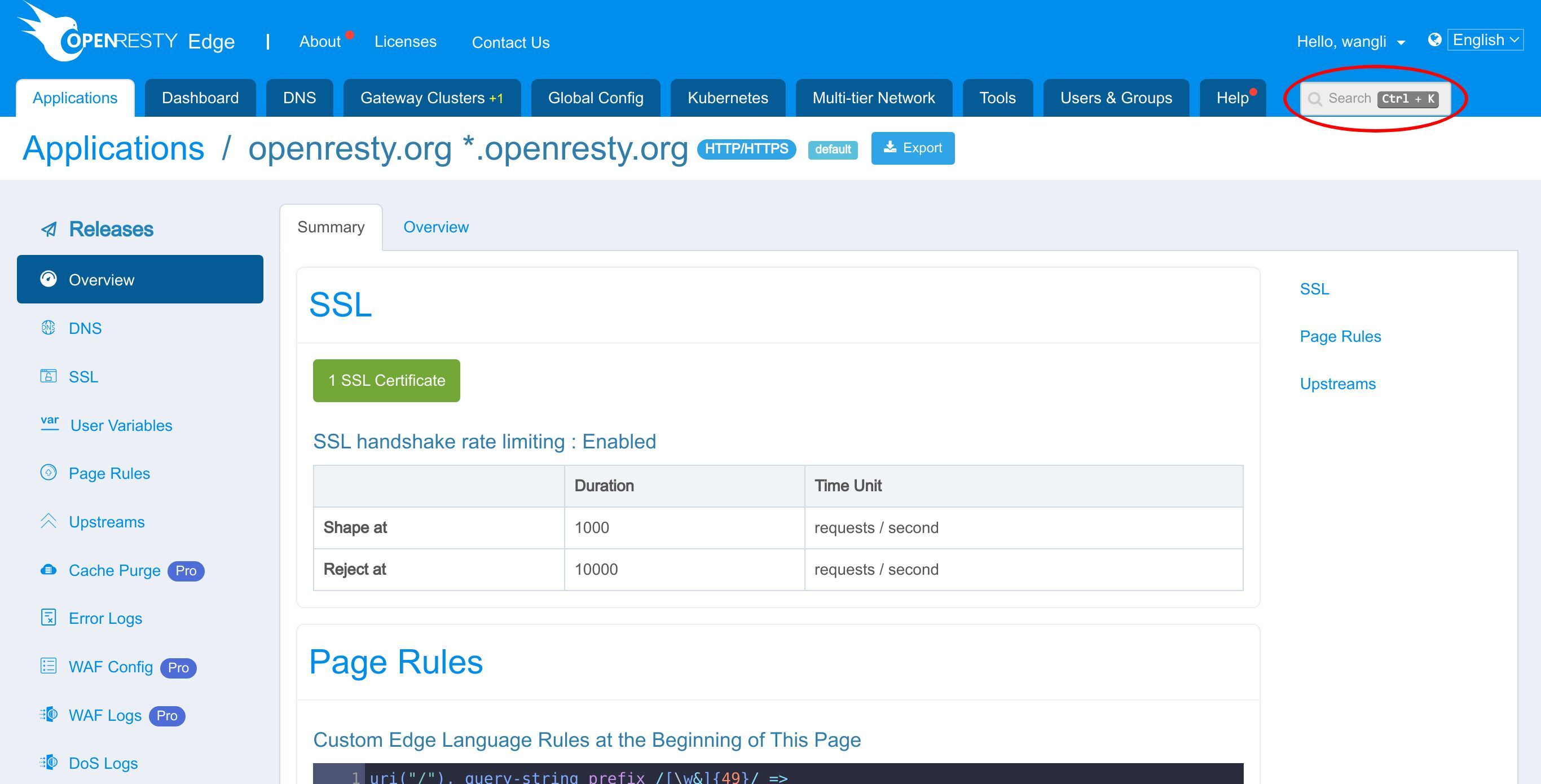
Open the search box again.
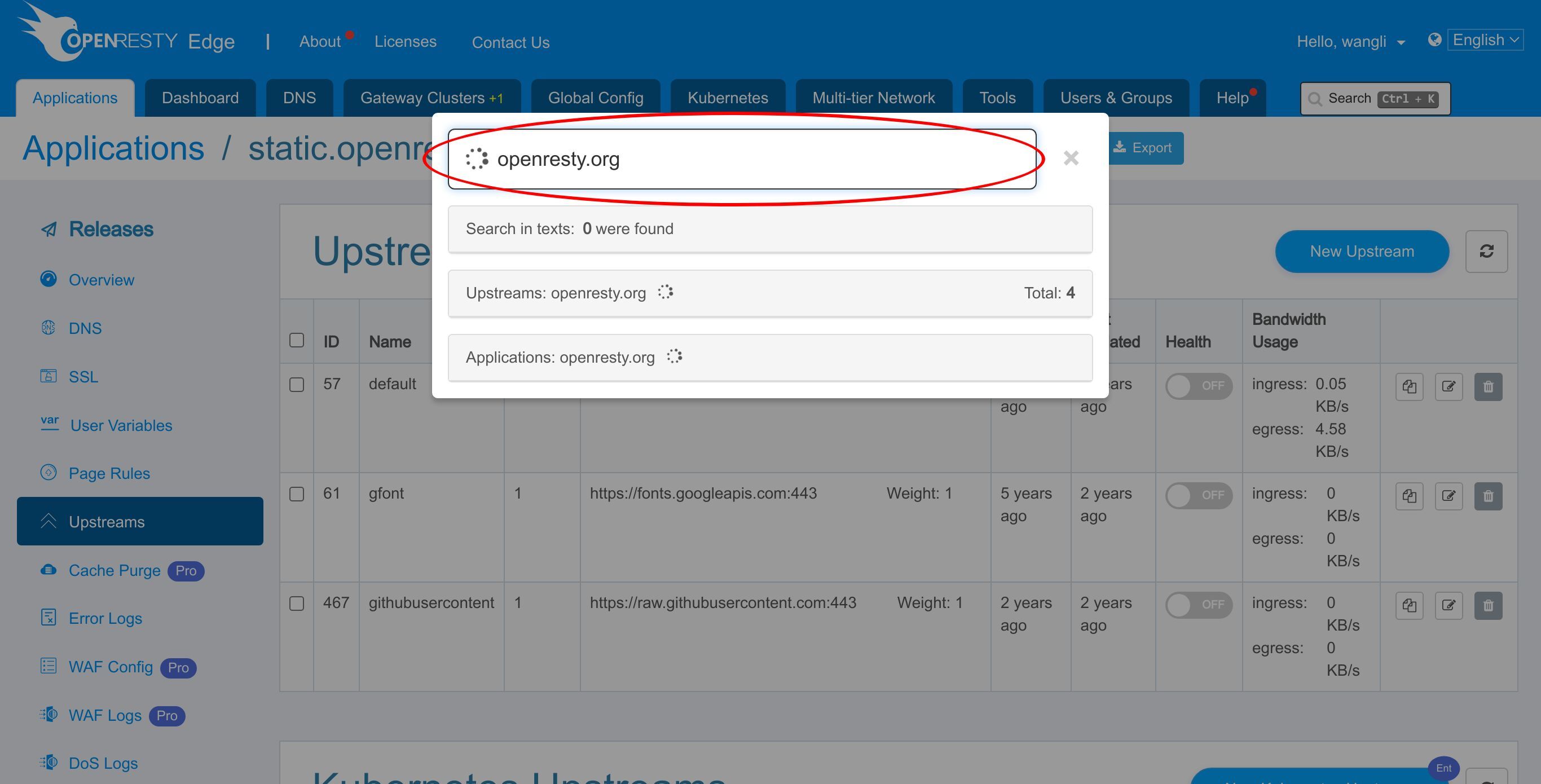
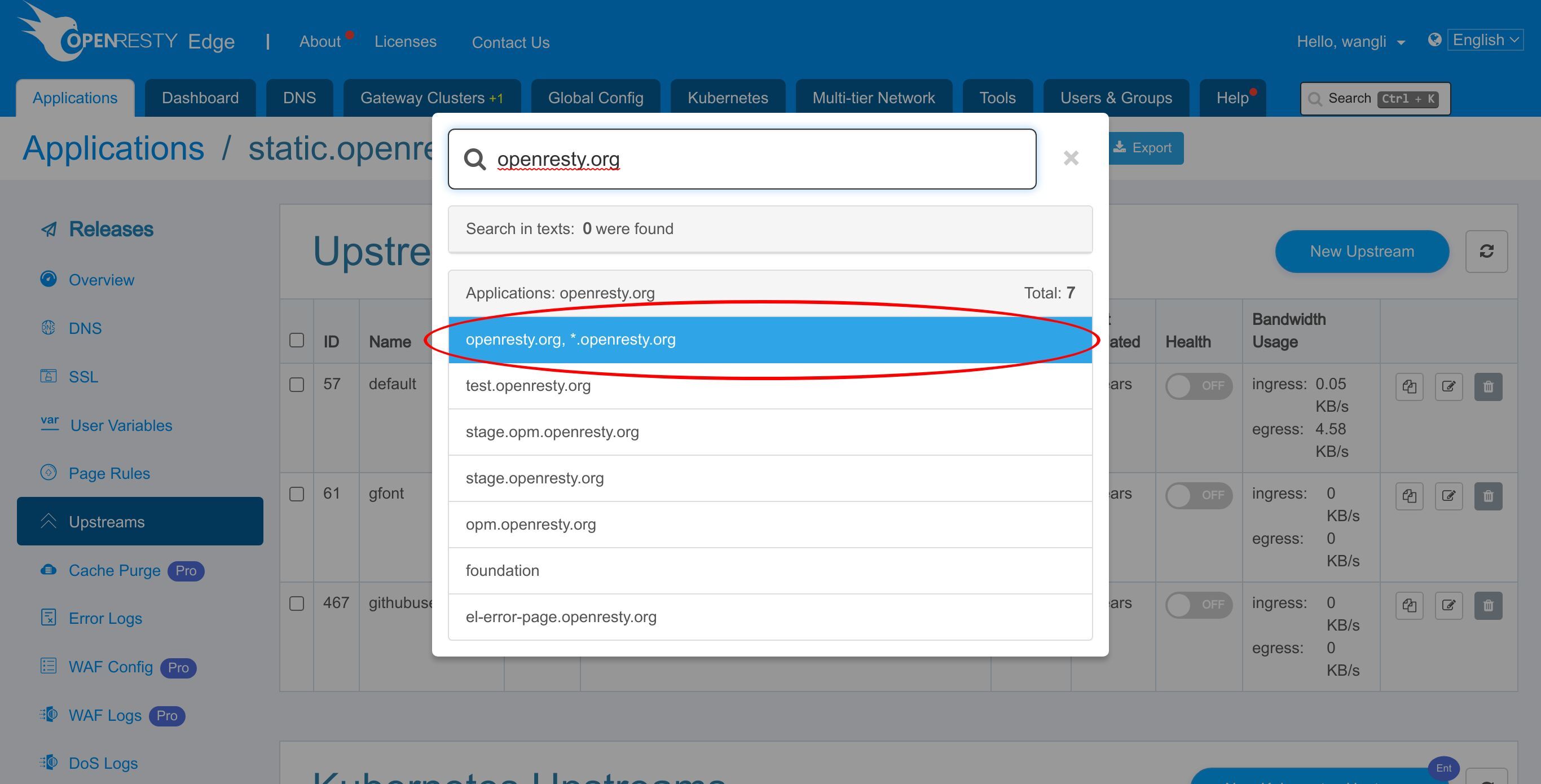
Enter openresty.org.
You can see that there are seven results.
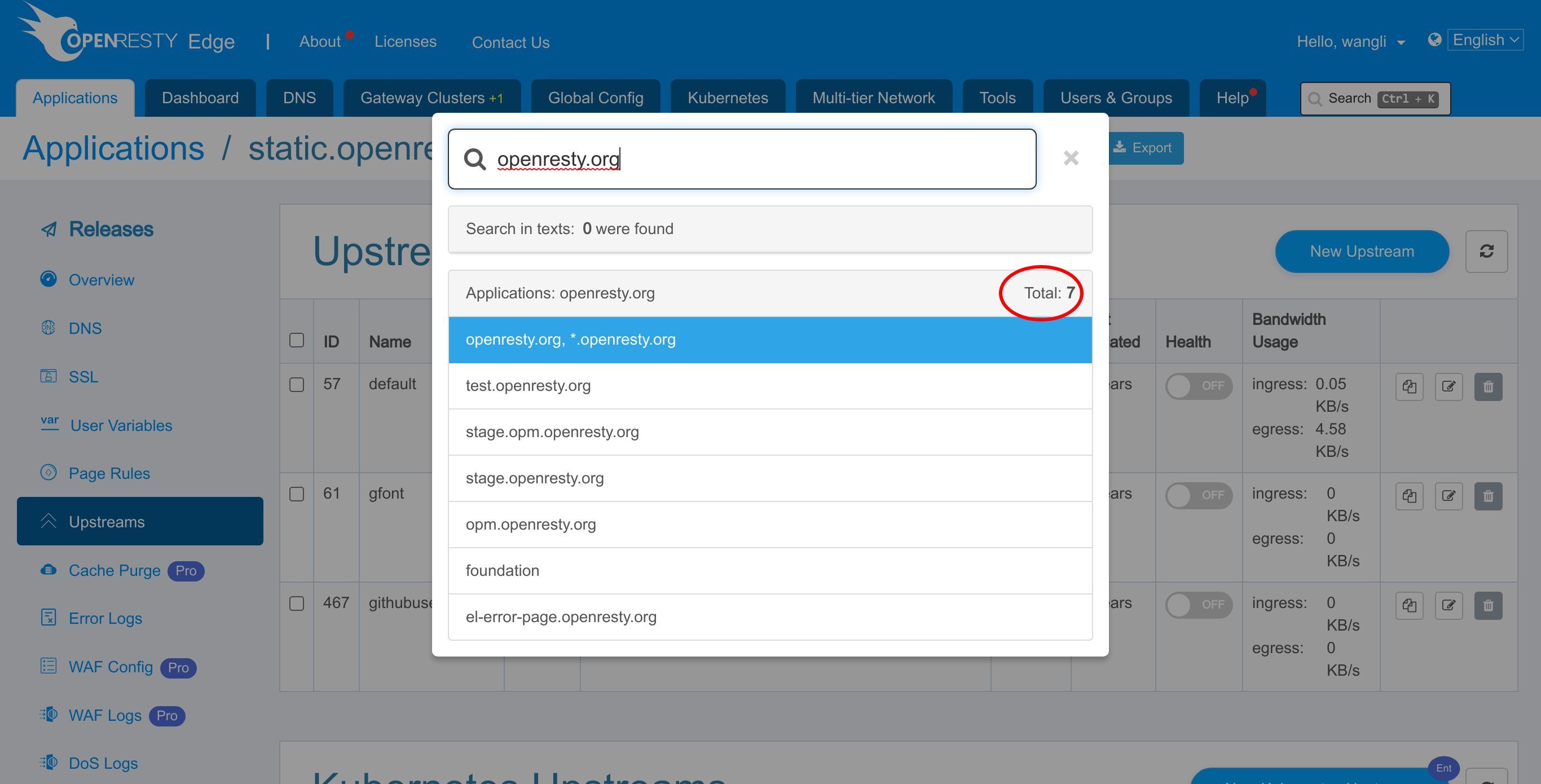
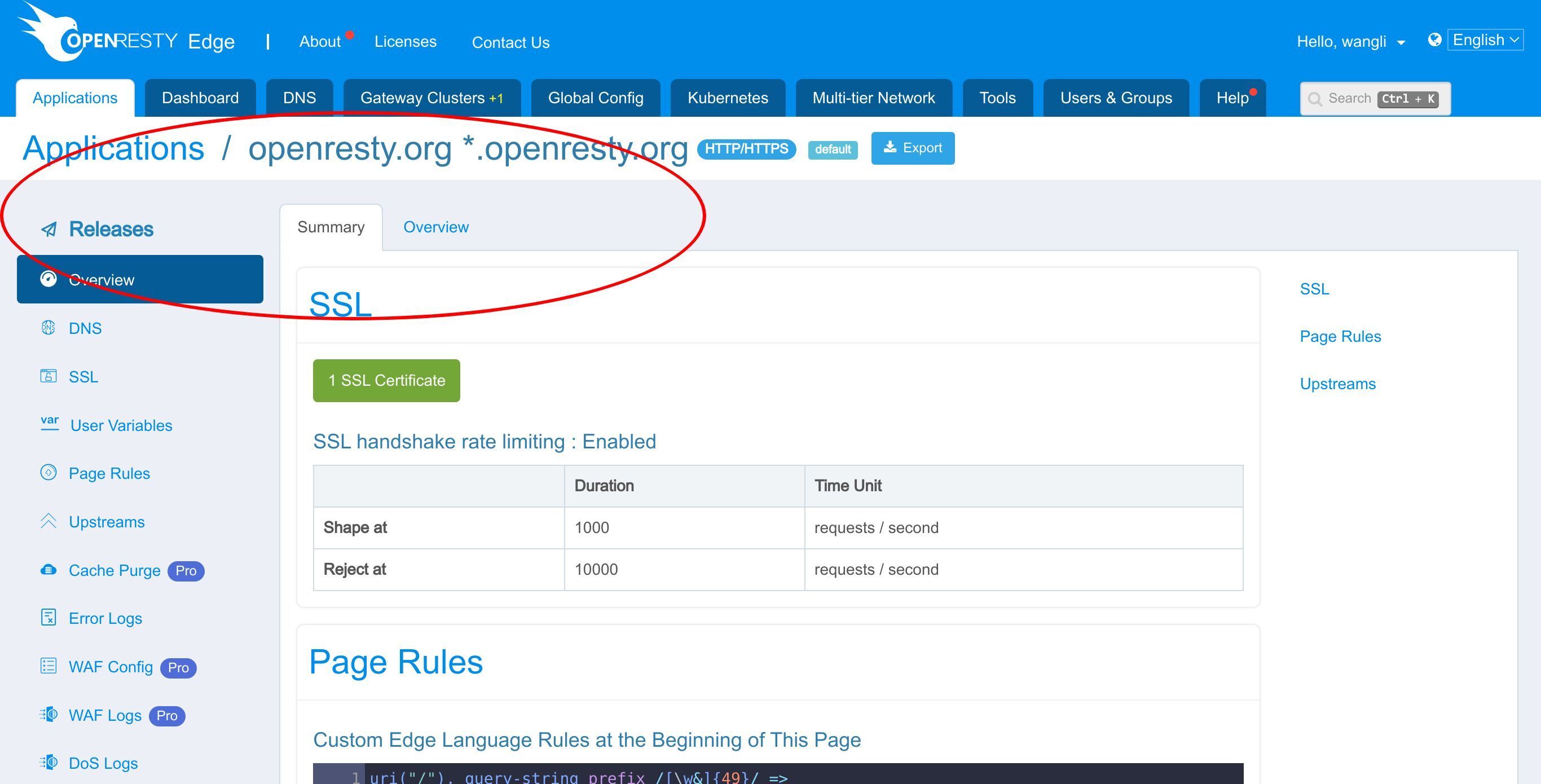
Click to enter the first result.
You can see that we are on the Application Overview page.
Search for Blog Posts
The last thing that we can search for in OpenResty Edge is blog articles.
Enter “staging servers”.
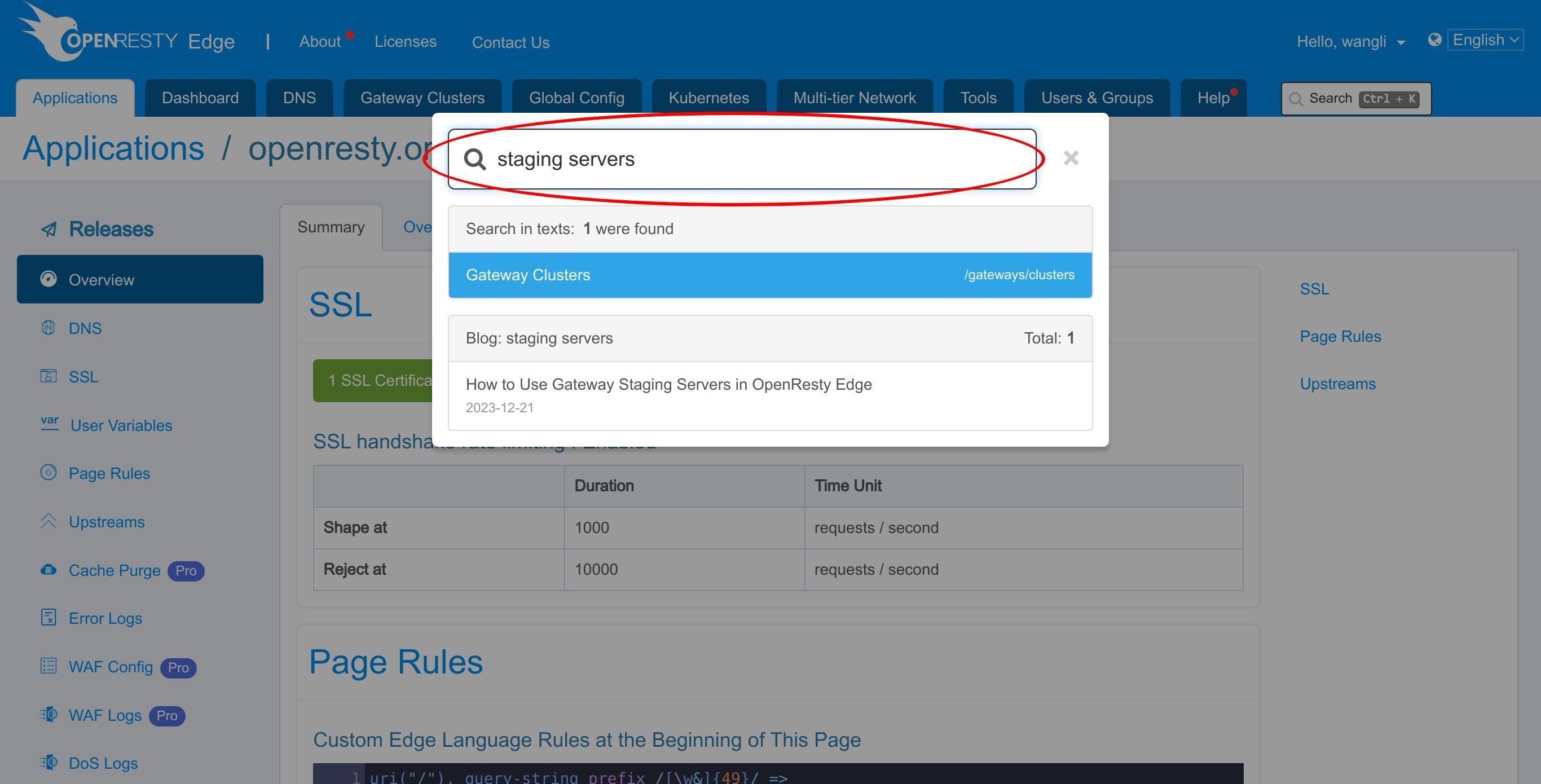
We find one result in the group “Blog”.
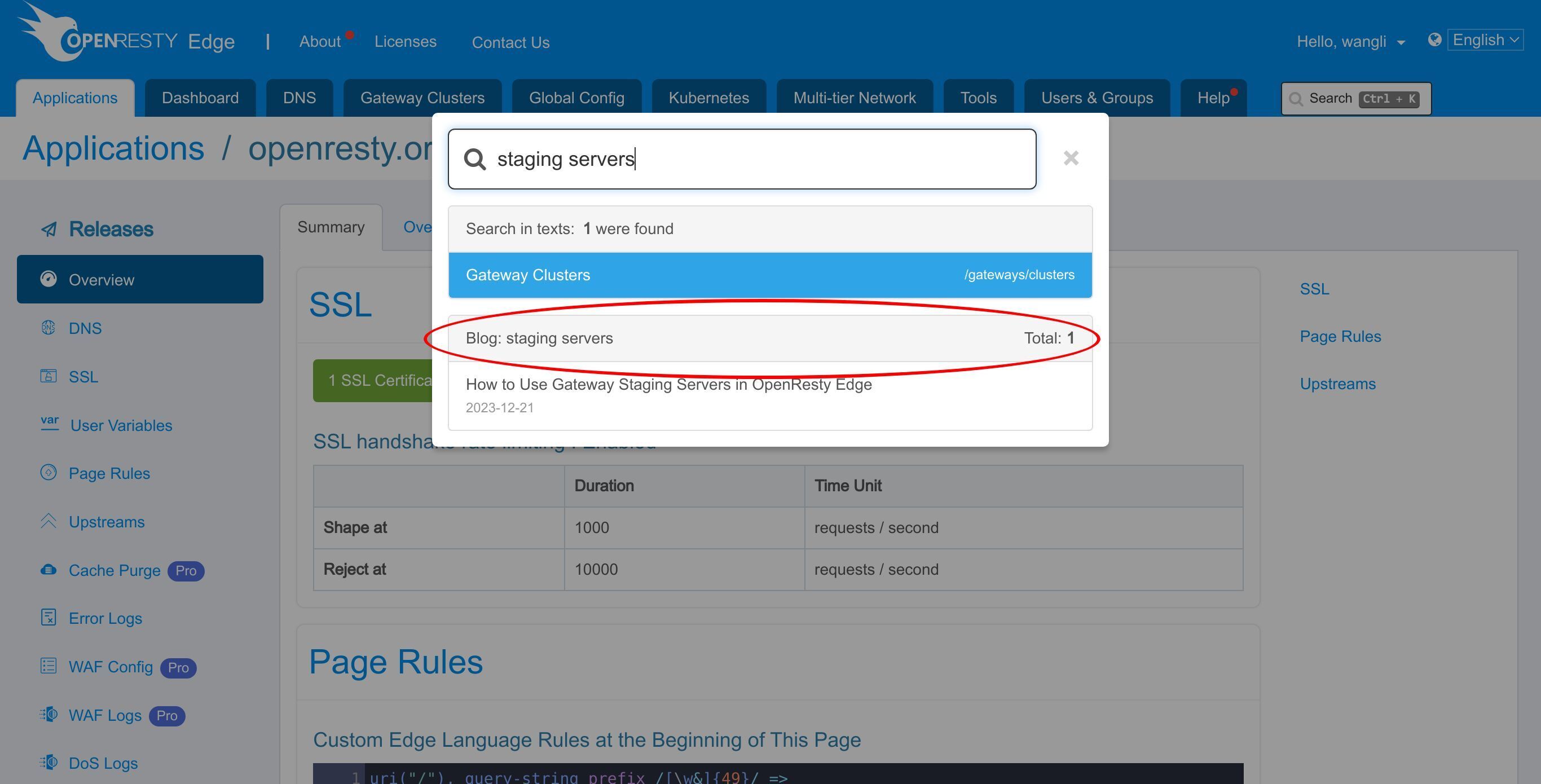
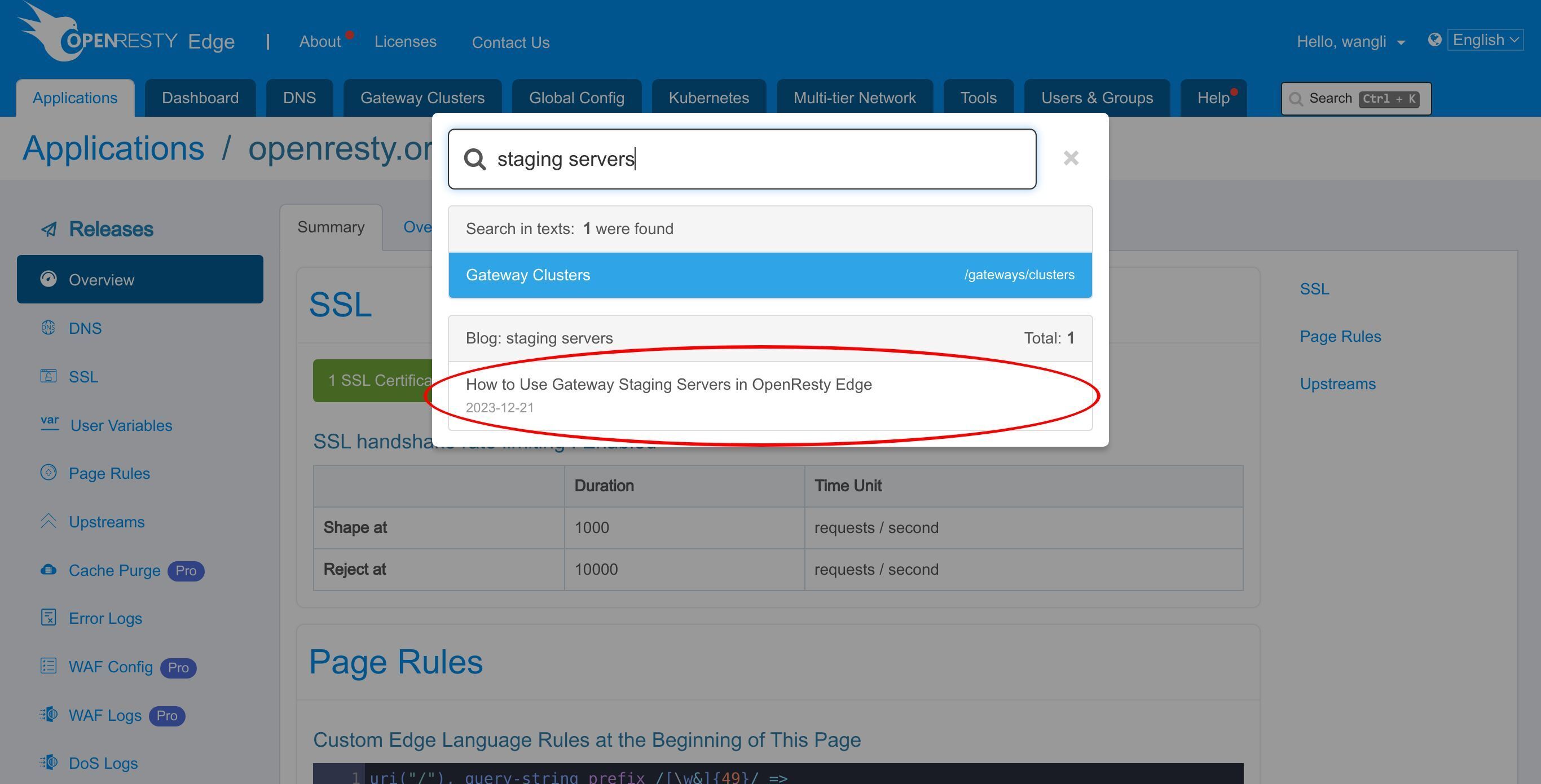
The title and update date of the article are shown in the results.
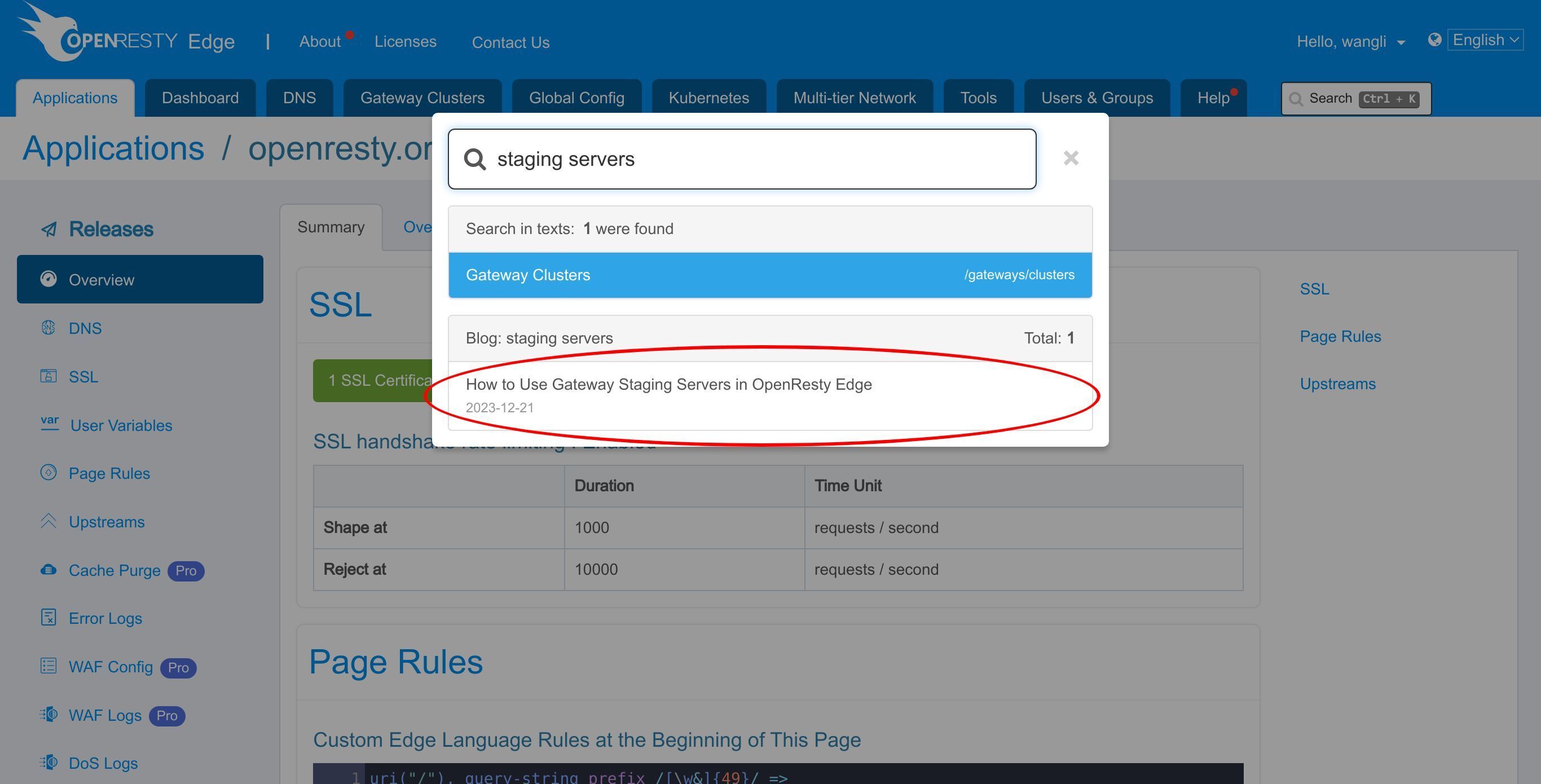
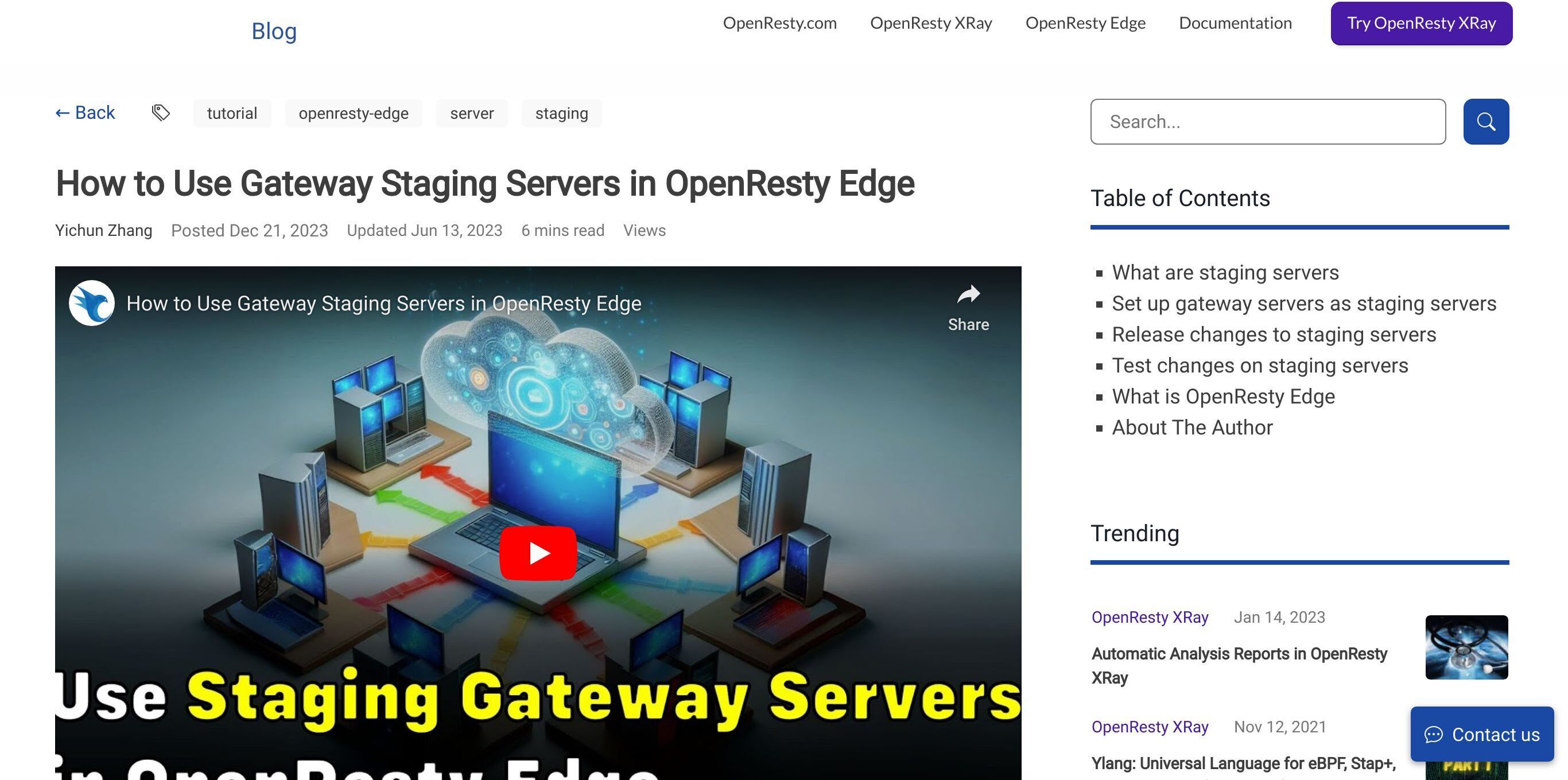
Click on the title. You can open this article.
Frequently asked questions
What can OpenResty Edge’s global search find?
The global search box searches five kinds of objects from one place: a Request ID (which opens the Request ID Decoder), text on the interface, upstreams by IP address or name, applications by name, and blog posts. Type a keyword and Edge takes you straight to the matching page.
How do I search by Request ID in OpenResty Edge?
Every request in OpenResty Edge carries a 24-character Request ID, shown in each application’s error log entries. Copy a Request ID, paste it into the global search box, and click the result. You land on the Request ID Decoder page, where you can read the details decoded from that request.
How do I find an upstream by IP address in OpenResty Edge?
Enter the IP address in the global search box—even a partial one, such as an address ending in .188. The results list matching upstreams with their names, the owning application, and a (Global) marker for global upstreams. Click a result to open the Edit Upstream panel at that host.
Can I search upstreams by name as well?
Yes. Enter part of an upstream name, such as github, and the results list every upstream whose name contains that text. Clicking a result opens the upstream so you can confirm its host.
Can OpenResty Edge global search find blog posts?
Yes. Enter a topic such as staging servers and matching articles appear under a Blog group in the results, showing each article’s title and update date. Click a title to open the article.
What is OpenResty Edge
OpenResty Edge is our all-in-one gateway software for microservices and distributed traffic architectures. It combines traffic management, private CDN construction, API gateway, security, and more to help you easily build, manage, and protect modern applications. OpenResty Edge delivers industry-leading performance and scalability to meet the demanding needs of high concurrency, high load scenarios. It supports scheduling containerized application traffic such as K8s and manages massive domains, making it easy to meet the needs of large websites and complex applications.
If you like this tutorial, please subscribe to this blog site and our YouTube channel. Thank you!
About The Author
Yichun Zhang (Github handle: agentzh), is the original creator of the OpenResty® open-source project and the CEO of OpenResty Inc..
Yichun is one of the earliest advocates and leaders of “open-source technology”. He worked at many internationally renowned tech companies, such as Cloudflare, Yahoo!. He is a pioneer of “edge computing”, “dynamic tracing” and “machine coding”, with over 22 years of programming and 16 years of open source experience. Yichun is well-known in the open-source space as the project leader of OpenResty®, adopted by more than 40 million global website domains.
OpenResty Inc., the enterprise software start-up founded by Yichun in 2017, has customers from some of the biggest companies in the world. Its flagship product, OpenResty XRay, is a non-invasive profiling and troubleshooting tool that significantly enhances and utilizes dynamic tracing technology. And its OpenResty Edge product is a powerful distributed traffic management and private CDN software product.
As an avid open-source contributor, Yichun has contributed more than a million lines of code to numerous open-source projects, including Linux kernel, Nginx, LuaJIT, GDB, SystemTap, LLVM, Perl, etc. He has also authored more than 60 open-source software libraries.
Related Articles
OpenResty XRay Jun 27, 2024

OpenResty XRay Jun 26, 2024

OpenResty XRay May 8, 2024

OpenResty XRay Apr 28, 2024

OpenResty XRay Apr 10, 2024